Your container is bound for Ohio, and the plan you were given stops at the port. That is the problem most Ohio shippers run into first. The box lands at an East Coast port, rides rail to a Columbus ramp, and nobody has told you who unloads it or where the last leg starts. Or your receiver cannot take the full container at once, and you need the load split across deliveries without paying for a second warehouse move.
Transloading in Ohio means unloading your container at an Ohio warehouse, building the freight onto pallets when needed, and reloading it onto domestic trailers for delivery or into short-term storage until the receiver is ready. A floor-loaded 40-foot container takes 2 to 5 hours of hand work to unload, while a palletized 40 takes 30 to 60 minutes with a forklift. That one difference sets the dock time, the labor, and the shape of the quote before anything else does.
Two gateways into Ohio
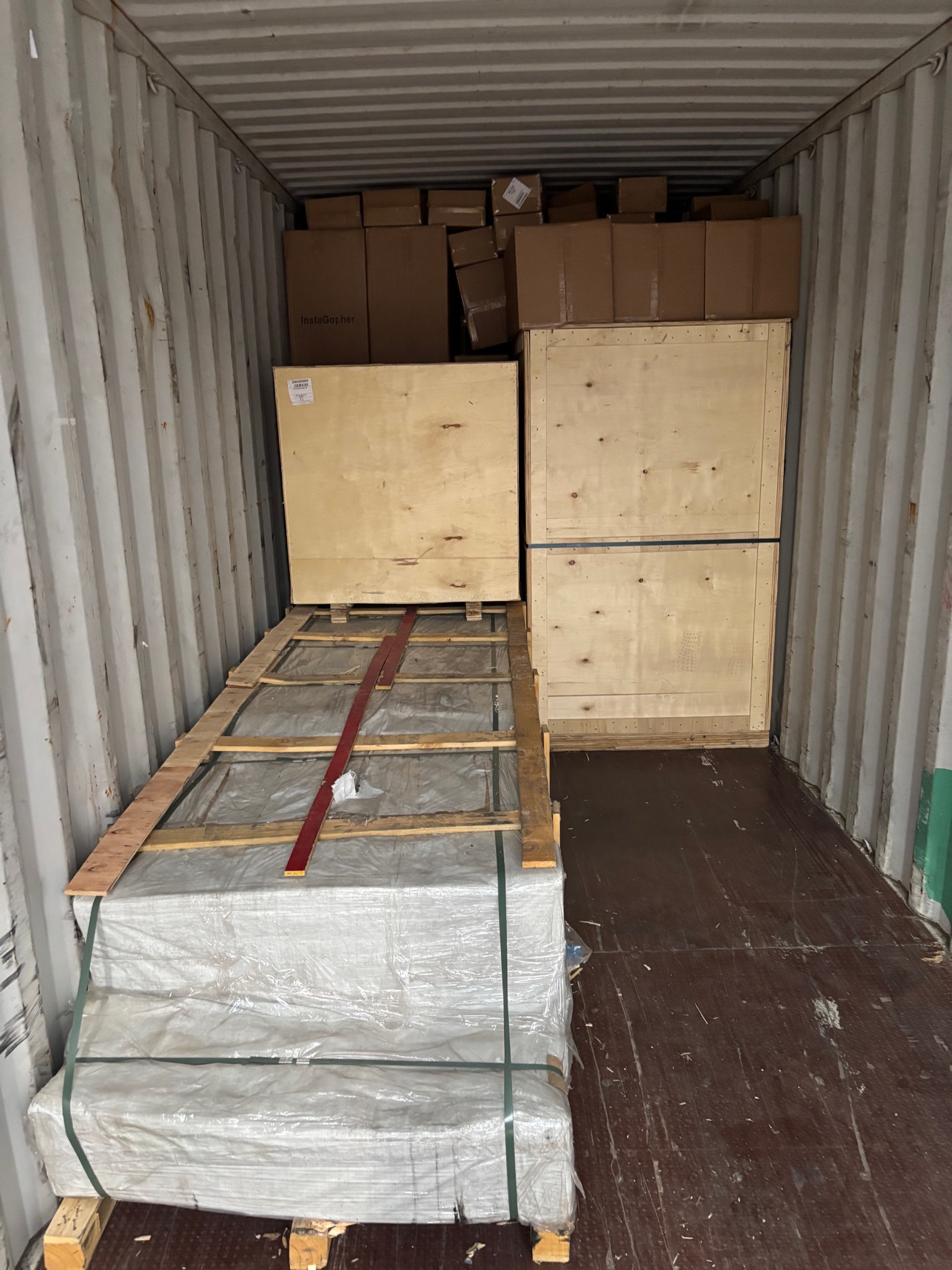
Ohio has two ways in, and they are not equal in size. Most container freight bound for Ohio lands at an East Coast gateway and rides intermodal rail to a ramp near Columbus. A smaller share comes through the Port of Cleveland on the lake. Both routes end the same way, with a warehouse crew unloading the container and reloading the freight. The route decides where that warehouse sits.
Start with your bill of lading. It names the discharge port. If it names New York and New Jersey, your box is on the rail route. If it names Cleveland, your box is on the lake route. That one line saves a round of wrong calls to warehouses on the wrong side of the state.
The dray is different. A Cleveland box needs a short dray from the port to a Cleveland-side warehouse. An East Coast box needs rail to Columbus first, then a pickup from the ramp to a Columbus-side warehouse. The warehouse does the unload in either case. The freight does not get devanned at the seaport terminal or at the rail ramp. It gets devanned at the warehouse, where the crew, the pallets, and the dock space are.
The Cleveland port path
The Port of Cleveland is a real working port, and it is also a small container port now. That is the honest scale to plan around. The port moved 9,978 TEUs of containerized goods in the 2022 shipping season, more than double the 4,810 TEUs in 2021 and well above its five-year average of 4,956 TEUs. Volume peaked at about 10,000 TEUs in 2022 and fell below 350 TEUs in 2025. Over 12 years the container operation handled about 35,000 TEUs and lost about 11 million dollars.
The port itself is far bigger than its container count. The Port of Cleveland handles roughly 12 million tons of cargo each year and generates over 7 billion dollars in annual economic activity supporting more than 23,000 jobs. Most of that cargo is bulk and Great Lakes freight, not containers. A shipper who reads the tonnage figure and plans around a large container gateway will be disappointed. The tonnage is real. The container volume is not large.
If your box does come through Cleveland, a Cleveland-side warehouse is the right call. The dray is short, and the crew unloads at the warehouse. Do not plan around a Cleveland sailing schedule from an old announcement, because the current sailing status is unconfirmed.
No listed warehouse sits inside a port terminal. That is worth stating plainly, because a shipper with a driver at the gate will ask. The warehouse takes the dray from the port. The driver brings the box to the warehouse dock, or the warehouse arranges the pickup, and the unload happens there. If you need container unloading in Cleveland, that is the work to ask for, and the warehouse on the Cleveland side is the one to ask.
The East Coast gateway and the rail trip inland
This is the route most Ohio boxes take. The Port of New York and New Jersey handled 8,897,531 TEUs in 2025, its third-busiest year on record, up 2.3 percent on the prior year. That scale is the point. When a shipper says their Ohio freight came through New York and New Jersey, they are describing the normal path, not an exception.
From the East Coast gateway, the box rides rail inland to a Columbus ramp. The Norfolk Southern Rickenbacker Intermodal Terminal near Columbus covers about 175 acres and can handle more than 400,000 containers a year. Both Norfolk Southern and CSX have rail hubs in the Rickenbacker Inland Port, with direct rail access to major East Coast seaports. The CSX Columbus intermodal terminal, Buckeye Yard, sits at 2351 West Belt Drive with direct access via I-270. A 59 million dollar expansion completed in 2013 doubled its capacity from 180,000 to 360,000 lifts per year.
Cleveland side or Columbus side
Once you know the gateway, the choice is simple. Cleveland side or Columbus side. Pick the side that matches where the box lands and where the freight needs to go next.
The Cleveland side covers Brooklyn Heights and Strongsville. Corridors here are I-71, the Cleveland to Columbus spine, I-80 and the Ohio Turnpike running east and west, and I-77 running south from Cleveland. A Cleveland-side warehouse takes Port of Cleveland drays and serves freight bound for northeast Ohio and points east and south on those corridors. It is the right side for a box that landed in Cleveland, and for freight that needs to deliver in the Cleveland area.
The Columbus side covers Columbus and Delaware. Corridors here are I-70 and I-71, I-270 around Columbus, and US-23 running north from Columbus to Delaware. The Columbus cross-dock sits on I-70 and I-71, a natural consolidation point for freight moving to Cincinnati, Cleveland, Pittsburgh, Indianapolis, and Louisville. A Columbus-side warehouse takes freight off the Rickenbacker and CSX ramps and serves freight bound for central Ohio and the surrounding states. It is the right side for a box that rode rail to Columbus, and for freight that needs to fan out from the center of the state.
Do not pick a side by building size. A bigger building on the wrong side still means a longer dray and a later turn. Pick by the box. Where did it land, and where does the freight go after the unload? That answer points to the side. The warehouse on that side can then confirm the dray, the appointment, and the timing.
If the receiver cannot take the freight right away, read Short-term warehouse space in Ohio. When the freight needs to move straight from the container to an outbound truck, the read is Cross docking in Ohio. Container unloading in Cleveland covers the port path in detail. And if a load arrives shifted or leaning and needs rebuilding before it can deliver, see Pallet restacking in Ohio.
What happens at the dock
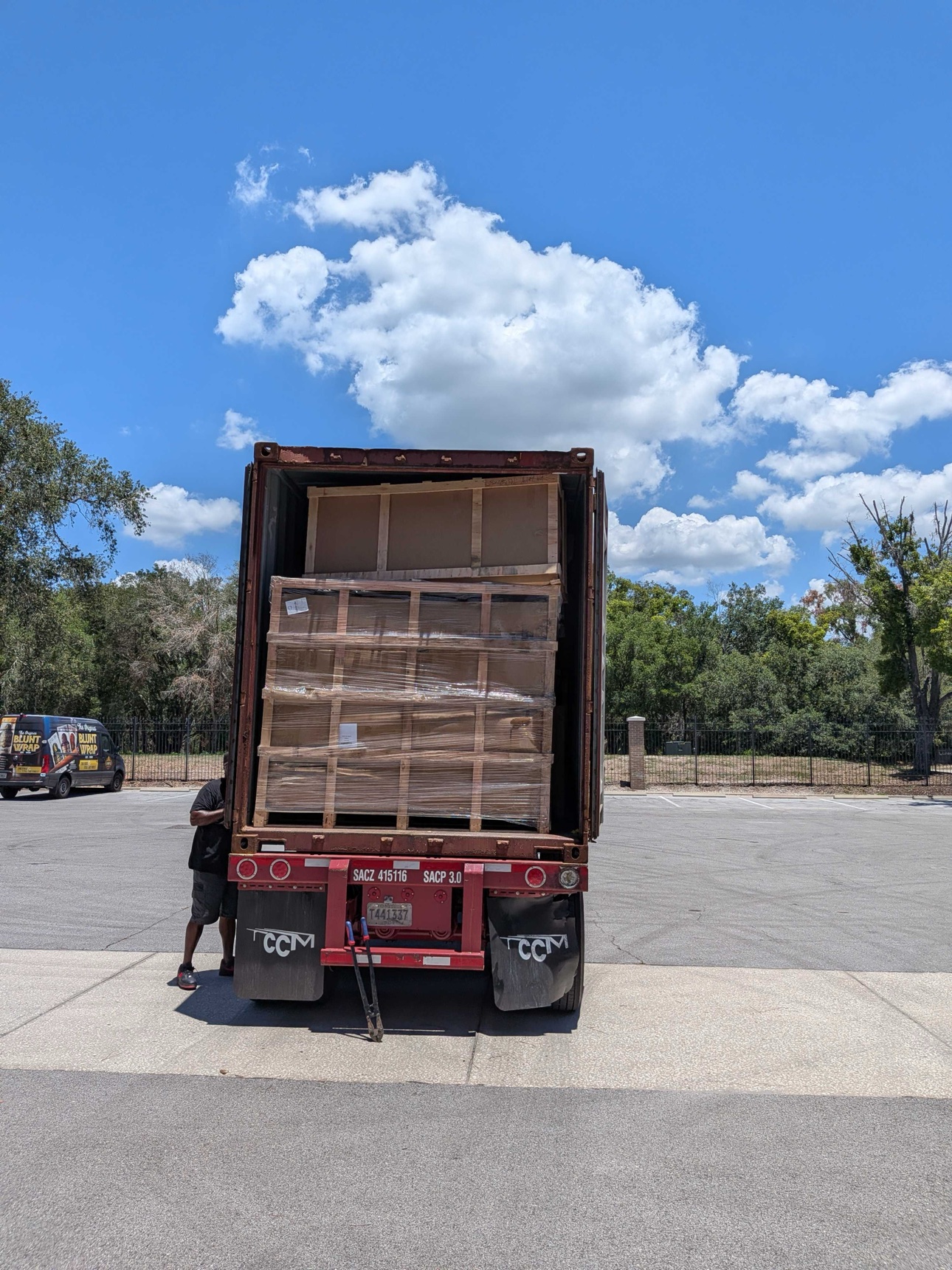
The dock work is straightforward once you know the load type. A palletized 40-foot container takes 30 to 60 minutes to unload with a forklift. A floor-loaded 40 takes 2 to 5 hours of manual labor to devan. That gap is the reason the quote request must name the load type. A warehouse that plans for an hour and gets five hours of hand work will miss the next appointment, and the driver will sit.
A 40-foot container becomes about 20 pallet positions and a 20-foot container about 10. Those counts are guides, not guarantees. The actual count depends on the item size, the stack, and how the freight was loaded. The warehouse will confirm the count when it sees the pack list or the load itself. Send the pack list and let the crew plan from it.
The crew unloads the container, builds pallets when the load came in loose, and reloads the freight onto domestic trailers. The work can be a straight reload, with the freight moving from the container to the outbound truck in the same visit. It can also be a reload into short-term storage, with the freight held at the warehouse until the receiver is ready or the next delivery is scheduled. Tell the warehouse which one you need. The dock plan is different, and so is the price.
Split delivery is standard work for the listed Ohio warehouses. One container can go out on several trucks to several destinations. Tell the warehouse the full scope when you contact it, including each destination and the pallets per destination. The warehouse may arrange the outbound trucks, or you may arrange your own. Outbound is priced per truckload or per pallet depending on the load details and the warehouse rate structure. A split that is named up front gets priced up front. A split that appears after the unload gets reworked, and rework costs time.
The 53-foot guard belongs here, because it comes up on almost every transload quote. Three 40-foot containers into two 53-foot trailers works only for lightweight palletized freight. A loose-loaded 40 built to pallets can take two dry vans on its own. Heavy palletized freight weighs a dry van out before it cubes out. Do not assume the ratio. Send the weight and the pallet count, and let the warehouse confirm how many trailers the load actually needs.
Appointments and live unloads vary by warehouse. Most warehouses need advance appointments, and the lead time, the live-unload versus drop-trailer procedure, and the dock steps differ from one partner to the next. Confirm with the warehouse when you send your request. Contact the warehouse in advance and never show up unannounced. A driver who arrives without an appointment will wait, and a container that arrives without a dock plan will sit.
What shapes the quote
No exact Ohio rate is printed on this page, because none is sourced. Here are the drivers, so you know why two quotes for the same box can differ and what to change if the price comes back high.
Load type is the largest driver. Floor-loaded freight takes 2 to 5 hours of hand work. Palletized freight takes 30 to 60 minutes with a forklift. That labor gap shows up in every quote, and it is the first number the warehouse will ask about. If you can get the load palletized at origin, say so. If you cannot, say that too, and send the pack list.
Pallet count is next. A 40-foot container becomes about 20 pallet positions, and the count sets the dock time, the storage footprint, and the outbound trailer count. Sort and rework add more. A load that needs sorting by SKU, relabeling, or rebuilding will cost more than a load that moves straight from the container to the truck. Name the sort work in the request, not after the container is open.
One cost figure is worth printing, with its limits stated. Devanning labor at most US destination facilities runs 300 to 600 dollars per container in lumper fees, per an industry guide. That figure is the warehouse cost in labor, not what the shipper pays. It is a guide to the labor inside the quote, not a rate for Ohio. Your quote will reflect the load type, the pallet count, the sort work, the storage time, and the split, and the warehouse will give you the number that applies to your load.
What to send for a real quote
A quote request that leaves out the load type will come back with a question instead of a price. A complete packet gets a usable answer. Send the items below in one message to the warehouse, and the reply will come as soon as possible, normally within 24 hours or less.
- Container size and load type, floor-loaded or palletized, plus the pallet count if you know it.
- Weight and dimensions of the items, or an itemized pack list.
- Pickup point, discharge port or rail ramp, and the date the box is available.
- Delivery destinations, with pallets per destination for split delivery.
- Dates, appointment needs, and how long the freight may need short-term storage.
- Any sort, relabel, or rework the load needs before it delivers.
That packet is the whole job. The warehouse does not need a long explanation of your business. It needs the box, the load, the destinations, and the dates. Send those six items and the warehouse can price the dray, the dock time, the storage, and the outbound trucks in one pass.
Find a warehouse in Ohio
Start on the Ohio map page. Find a warehouse in Ohio (https://transloadnow.com/regions-we-serve/find-a-warehouse-in-ohio/) shows the currently listed warehouses, with contact details and the services each one tags. Send your quote packet directly to the warehouse on the side your box lands on. Call to confirm the services, the appointment, and the timing before the driver rolls.
The warehouses currently listed in Ohio are North East Freight and Logistics in Brooklyn Heights, Order Fulfillment Solutions in Columbus, Amani Plastics in Delaware, and Logistics Plus CLE in Strongsville.
Order Fulfillment Solutions in Columbus lists a 40,000 sq ft full-service fulfillment center and says it can jump to 150,000 sq ft, and tags drayage and HAZMAT among its services. Logistics Plus CLE in Strongsville lists a 165k+ sq ft Cleveland warehouse and tags cross-dock, storage, and transloading. Each one tags transloading on its directory page. Call to confirm, because listings change and the map page is the current record.
Same-day work is often possible based on availability, and next-day work is commonly doable. Contact the warehouse in advance and never show up unannounced. Send the complete packet, name the gateway, and let the warehouse confirm the turn. That is the fastest path from a container bound for Ohio to freight on a truck to your customer.
Frequently asked questions
Transloading in Ohio means unloading your container at an Ohio warehouse and reloading the freight onto domestic trailers or into short-term storage. Shippers use it to avoid per-diem charges, split one container across several deliveries, or stage freight near the customer. The warehouse does the unload, the palletizing, and the reload, and you send one quote request to start it.
Most Ohio boxes come through an East Coast gateway, usually the Port of New York and New Jersey, and ride rail to a Columbus ramp such as Rickenbacker or the CSX Columbus terminal. The Port of Cleveland moved 9,978 TEUs in 2022 and fell below 350 TEUs in 2025, so it is the smaller path now. Check your bill of lading for the discharge port, then pick the warehouse side that matches where the box lands.
A palletized 40-foot container takes 30 to 60 minutes to unload with a forklift, while a floor-loaded 40 takes 2 to 5 hours of manual labor to devan. A 40-foot container becomes about 20 pallet positions and a 20-foot container about 10. Tell the warehouse which load type you have, because it sets the dock time and the labor in the quote.
Yes, split delivery is standard work for the listed Ohio warehouses, with one container going out on several trucks to several destinations. Tell the warehouse the full scope when you contact it, including each destination and the pallets per destination. The warehouse may arrange the outbound trucks, or you may arrange your own.
Send the container size and load type, the pickup point, the delivery destinations, and your dates. Include this line with your request: Weight and dimensions of the items, or an itemized pack list. A complete packet gets a usable quote back as soon as possible, normally within 24 hours or less.
Same-day work is often possible based on availability, and next-day work is commonly doable, but confirm the timing with the warehouse when you send your request. If your receiver is not ready, the warehouse can put the freight into short-term storage instead of leaving it on a chassis. Contact the warehouse in advance and never show up unannounced.