
Your receiver turned the load away. The driver is sitting at the dock, the detention clock is running, and the freight is leaning hard enough that nobody will unload it. That is the moment this page is for. You do not need a quote form. You need a warehouse in Ohio that restacks loads, a phone number, and a dock time.
Pallet restacking is rebuilding a shifted or refused load pallet by pallet until it is safe to unload and deliver again. The crew works inside the trailer, restacks the full load, and the truck leaves as the same dry van it arrived as.
Ohio has two sides to this problem, not one. The Cleveland side takes the northern freight. The Columbus side takes the central freight. Your truck is on one of five roads, and the nearest dock that restacks is the one that matters. Start with where the truck sits.
I-71 between Cleveland and Columbus
I-71 is the spine that runs Cleveland to Columbus, and a truck on it can head to either end. That is the first decision. If the truck is north of the middle, aim for the Cleveland side. If it is south of the middle, aim for Columbus. Do not send it to the far end when a closer dock tags restack work.
On the Cleveland end, the listed warehouses sit around Brooklyn Heights. On the Columbus end, a listed warehouse in Columbus tags restack and pallet reworking.
Check the service tags on the map listing before you call. Not every listed Ohio warehouse tags restack, and the tag is what tells you the warehouse lists the work. Call the one nearest your truck that shows the tag, describe the load, and book a dock time.
I-70 through Columbus
I-70 runs straight through Columbus, and the Columbus cross-dock sits on I-70 and I-71. That crossing makes it a natural consolidation point for freight moving to Cincinnati, Cleveland, Pittsburgh, Indianapolis, and Louisville.
The Columbus side has a listed warehouse that tags restack and pallet reworking, inside a fulfillment center that runs 40,000 square feet with room to grow to 150,000. For a truck on I-70 near Columbus, that is the first call.
Call before you send the truck. Appointments and dock times vary by warehouse, and a restack needs a dock with the crew ready. Tell them the truck is on I-70, which direction it is heading, how many pallets are on it, and what shifted.
I-80 and the Ohio Turnpike
I-80 and the Ohio Turnpike carry the east-west freight across northern Ohio, through the Cleveland area and on toward Pennsylvania and New York in one direction and Indiana and Chicago in the other. A truck on the Turnpike with a refused load does not need a warehouse in central Ohio. It needs a Cleveland-side dock.
Head for the listed warehouses on the Cleveland side that tag restack. Check the tags on the map listing first, then call. The tag is what says the warehouse lists the work, and the call is what confirms it.
The deal is the same as everywhere else on this page: the warehouse evaluates the load, the crew restacks inside the trailer, and the full load gets rebuilt.
I-77 south of Cleveland
I-77 runs south out of Cleveland, and a truck on it is caught between two answers. Head back north to the Cleveland-side warehouses, or keep going south toward Columbus. The right call is the nearest listed warehouse that tags restack, confirmed on the phone. Distance matters less than the tag and the dock time.
Just south of Cleveland, the Cleveland side is usually the answer. Further down I-77, past the Akron and Canton area, Columbus is close enough to weigh. Either way, the broker makes one call, not five. Check the tags, call the nearest warehouse that shows the tag, and ask for the next dock time.
Do not let the truck sit on I-77 while the broker shops the job around. The load is already refused once, and every hour on the road is detention building and a delivery appointment slipping. The truck goes back out as the same dry van it arrived as, usually the same one, so there is no new trailer plan to sort.
US-23 toward Delaware
US-23 runs north out of Columbus toward Delaware, and a truck on it has a listed warehouse in Delaware that tags restack and pallet reworking. That is the first call for a truck on US-23. The warehouse sits on the same road the truck is already on, so the run in is short and simple.
The Delaware listing shows Saturday open, but it does not say receiving runs on Saturday. Confirm the hours on the call before you send the truck on a weekend. Do not promise a weekend restack to the receiver or the driver until the warehouse says yes.
For a weekday truck on US-23, call the warehouse, describe the load, send photos if you have them, and book a dock time.
Why the dock turned the load away
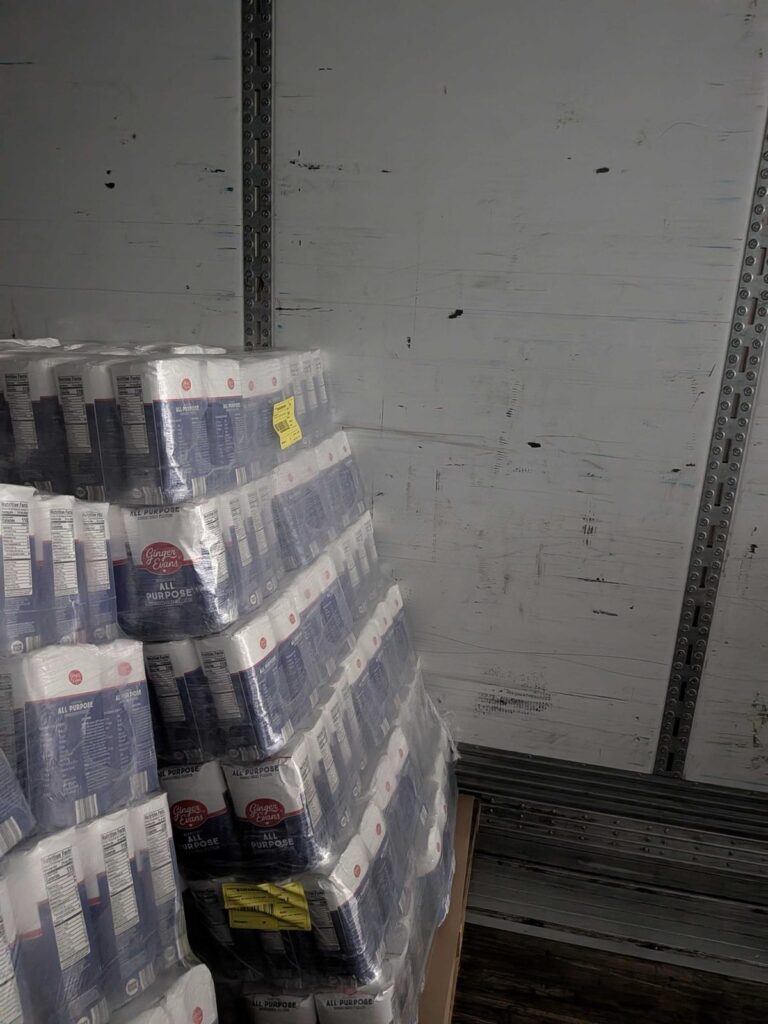
A receiver turns a load away for reasons a driver can see and a broker can describe. Pallets lean. Freight shifts in transit. A pallet collapses or breaks. The wrap is torn and the load is no longer tight. The freight no longer meets the carrier and consignee requirements, and the dock will not unload what it cannot safely handle.
A big-box receiver or a bottler like Coca-Cola will turn a leaning load away rather than put its crew under freight that could fall. That is not the receiver being difficult. It is the dock protecting its people and refusing to take freight it cannot stack or store. The load has to go back to a state the receiver will accept, and that means a rebuild.
Restack crews handle the whole range of it: restacking, rewrapping, repalletizing, and inspecting freight to meet carrier and consignee requirements, plus re-strapping and replacing broken pallets.
When you call the warehouse, describe what the receiver saw. Say which pallets lean, which ones shifted, whether any broke, and whether the wrap held. Photos help more than a long description.
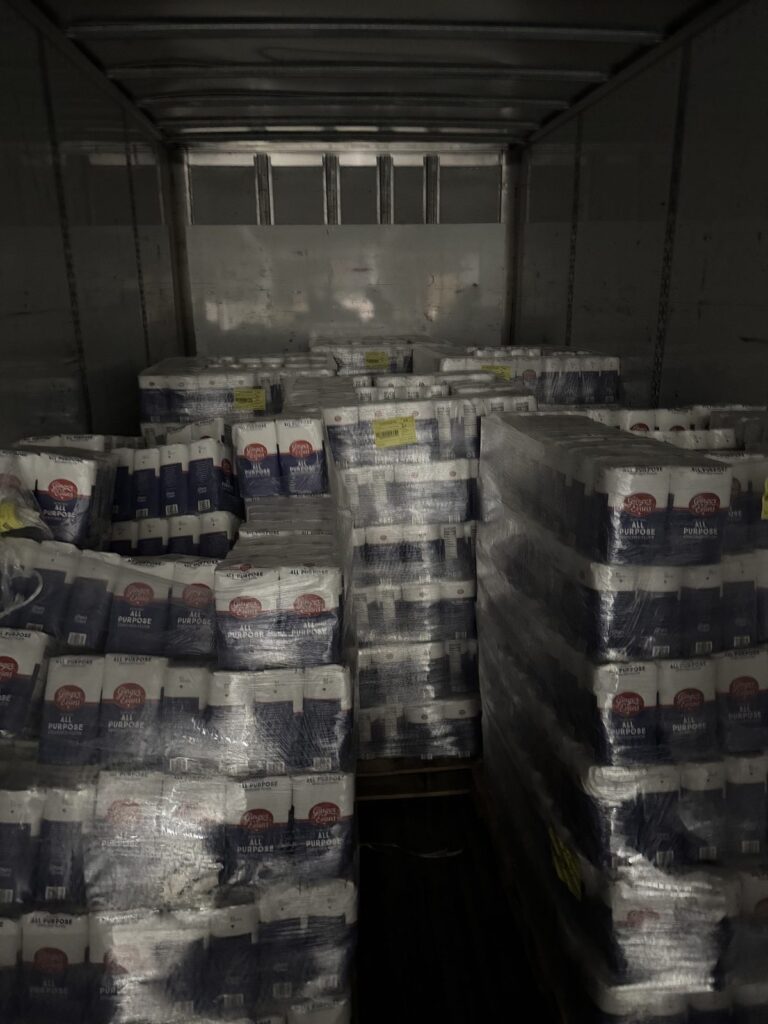
How the rebuild works once the truck is on the dock
The flow is the same at every listed Ohio warehouse that does this work.
- The receiver rejects the load. The driver is sitting, and someone has to find a restack warehouse.
- Someone sources a restack warehouse, usually with photos. Photos of the shifted load go with the call so the warehouse can see what it is taking in.
- The truck arrives and the warehouse evaluates the load. The crew looks at what shifted, what broke, and what the rebuild will take.
- If requested, the warehouse can take photos and estimate pallets to restack before beginning. Ask for this on the call if the receiver or the shipper needs a count before the work starts.
- The crew restacks inside the trailer. Shifted pallets cannot be safely moved to the floor, so the rebuild happens where the freight sits.
- The full load is restacked. Never a partial fix. A few leaning pallets still mean the whole trailer gets rebuilt, because a partial fix leaves freight the receiver can refuse again.
- The invoice is issued and paid in full before the driver is released, unless the client is a repeat client on normal terms. Settle who pays and how before the crew starts.
The truck goes back out as a dry van, usually the same one it arrived as. The load that came in leaning goes out rebuilt, headed back to the receiver or on to the next stop.
Find the warehouse on the map and call
Open the Ohio map page (https://transloadnow.com/regions-we-serve/find-a-warehouse-in-ohio/) and look at the service tags on each listing. The map is the directory, and the tags are what each warehouse claims. North East Freight and Logistics currently shows restack work in its tags, so it is the place to start on the map. Call to confirm before you send the truck.
Call directly. That is the fast track on a restack. There is no written quote request and no waiting on a reply. You call, you describe the load, and you book a dock time. The warehouse will tell you on the phone whether it can take the trailer and when.
Contact the warehouse in advance and book a dock time. Never show up unannounced. A truck that arrives without a booked time waits. Call first, get a time, then send the truck.
If you are planning freight into Ohio rather than fixing a refused load, the Transloading in Ohio page covers the wider picture. This page is for the truck that is already sitting.
What to tell the warehouse on the first call
The warehouse can say yes on the phone if you give it the right facts. Have them ready before you call, and the call takes minutes.
Tell them where the truck sits right now. Name the highway and the direction, and the nearest city or exit if you know it. The warehouse needs the truck’s position to judge the run in and the dock time.
Tell them how many pallets are on the trailer and what shifted. Say which pallets lean, which broke, and whether the wrap held. Send photos if you have them. A photo of the load tells the crew more than a paragraph of description.
Tell them what the receiver said when it turned the load away. The exact refusal reason matters, because the rebuild has to fix what the receiver objected to. If the receiver wants the load re-strapped or re-wrapped, say so on the call.
Weight and dimensions of the items, or an itemized pack list.
Tell them where the load has to go next. The warehouse needs to know whether the truck goes back to the same receiver or on to a different stop, and whether the delivery appointment needs rebooking.
What sets the price
No set rate is printed here, because the warehouse prices each job from the load. The price comes from the work, not from a card. Here is what moves it.
Pallet count and how much of the load shifted set the labor time. A trailer with a few leaning pallets is a shorter job than a trailer where the freight went over across half the load. The crew time is the biggest driver, and the warehouse can only estimate it from the call details and the photos.
Rewrap, restrap, and pallet replacement add material and time. New pallets, fresh wrap, and strapping cost the warehouse money and take crew minutes. A load with broken pallets costs more to rebuild than a load where the pallets held and only the freight moved.
Give the warehouse the full call checklist and it can price the job. Get the price agreed before the crew starts, so nobody is negotiating with a driver sitting on the dock.
Sort the exit before the crew lifts a pallet
The rebuild is only half the job. The other half is getting the rebuilt load out the door and delivered. Settle it before the crew lifts a pallet.
Confirm where the rebuilt load goes next. Usually the truck goes back out as the same dry van, headed back to the same receiver or on to the next stop. If the receiver needs a new delivery appointment, rebook it while the crew works, not after the driver is already released.
Confirm the receiver will take the rebuilt load. The rebuild fixes what the receiver objected to, but the receiver still has to say yes to the new appointment.
Confirm who pays and how. The invoice is issued and paid in full before the driver is released, unless the client is a repeat client on normal terms. The broker, the shipper, and the carrier should all know who is paying before the work starts.
Frequently asked questions
Check the Ohio map page and look for the restack tag on each listing, then call the warehouse directly. Not every listed Ohio warehouse tags restack, so the tags and the call are what confirm it. A truck on I-71, I-70, I-80, I-77, or US-23 aims for the nearest listed warehouse that tags the work.
Call the warehouse directly and ask for the next dock time, since that is the fast track on a restack. Dock times depend on the warehouse and the day, so the call is the only honest answer. Do not send the truck without a booked time.
No. The crew restacks inside the trailer because shifted pallets cannot be safely moved to the floor. The full load is restacked, never just the leaning pallets. The truck goes back out as the same dry van it arrived as.
Yes. The invoice is issued and paid in full before the driver is released. The one exception is a repeat client on normal terms. Settle who pays and how before the crew starts, so the driver is not left sitting twice.
Tell them where the truck sits, how many pallets are on it, what shifted, and what the receiver said when it turned the load away. Send photos if you have them. Weight and dimensions of the items, or an itemized pack list.
Yes. The full load is restacked even when only a few pallets are leaning. A partial fix leaves freight the receiver can refuse again. The crew rebuilds the whole trailer so it goes out right.
No set rate is printed because the warehouse prices each job from the load. Pallet count, how much shifted, and rewrap or pallet replacement set the warehouse’s cost. Give the warehouse the full call checklist and it can price the job.