North Carolina transloading starts with a geography choice, not a port choice. The container port sits on the coast at Wilmington. The warehouses listed on TransloadNow sit inland, in the Piedmont and in the west. The work usually happens after a rail leg or a truck leg inland, at a warehouse picked for where the freight is headed next.
That order matters. Pick the city by the delivery map first, then pick the warehouse in that city. A warehouse close to the final customer shortens the outbound runs and puts the crew near the next move. A warehouse picked only because the box entered through a certain port can add an extra leg for no reason.
Start on the North Carolina map page, find the city that fits the freight, and send a complete quote request straight to a listed warehouse there. The map page is here: https://transloadnow.com/regions-we-serve/find-a-warehouse-in-north-carolina/
Pick the city by where the freight ends up
North Carolina freight falls into four inland areas on this directory. Each one serves a different delivery map, and each one connects to the gateways by a different road or rail leg.
Charlotte is the inland port city. It sits on the I-77 and I-85 corridors and on the CSX lines that connect to Wilmington. It fits freight distributing across the Carolinas and the Southeast, freight that needs a Charlotte area delivery base, and freight that arrives by rail to the Charlotte Inland Terminal and needs to be opened nearby.
The Piedmont Triad covers Greensboro, Lexington, and Winston-Salem, at the I-40 and I-85 crossroads in central North Carolina. The Triad fits freight distributing across central North Carolina and freight with several Piedmont stops.
The Triangle listing sits in Durham. Durham is the easternmost listing city and the closest to I-95. It fits freight bound for Raleigh-Durham customers and freight moving on I-40 and I-85 in the eastern Piedmont. Note that no listing sits in Raleigh itself, so Durham is the Triangle base on this directory.
Fletcher sits in western North Carolina near Asheville, on the I-26 corridor. It fits freight bound for western North Carolina, freight coming up from Charleston on I-26, and regional distribution toward Asheville.
None of these warehouses sits at the port. That is the point of the cluster. The port does its job on the coast, the inland leg moves the box to the Piedmont or the west, and the warehouse does its job where the freight will be used, stored, or sent onward.
The three gateways, and how each one reaches the Piedmont
Most North Carolina transload freight enters through one of three container gateways. The gateway sets the inland leg. It does not have to set the warehouse city, but the warehouse city should make sense with the leg the box already has to travel.
Wilmington is the North Carolina container gateway. The Port of Wilmington sits 26 miles up the Cape Fear River from the Atlantic, with a 42 foot channel, 9 berths, and 7 container cranes, including 4 post-Panamax cranes and 3 neo-Panamax cranes. Container terminal capacity as currently configured is 600,000 TEU a year. Volume was 289,000 TEUs in fiscal year 2024-25. NC Ports’ strategic plan projects 193,000 TEUs for the current fiscal year, a tariff-driven projection, not an actual. CSX provides on-dock rail at Wilmington, and Interstates 40 and 95 serve the port.
From Wilmington, freight reaches the Piedmont in two main ways. The Queen City Express is a daily double-stack intermodal rail service from Wilmington to Charlotte, with containers available in Charlotte less than 48 hours after vessel discharge, according to NC Ports. The other way is truck dray, east to west on I-40 into the Triad and the Triangle, or through Charlotte and then on I-85 and I-40. Either way, the devan work happens inland, at a Piedmont or western warehouse, not at the port.
Charleston, South Carolina is the second gateway for a large share of Piedmont freight. Charleston freight runs I-26 to I-77 into Charlotte. From Charlotte it can continue on I-85 to the Triad and the Triangle, or stay in the Charlotte area for local distribution. Fletcher is the most Charleston oriented listing in the cluster, because I-26 runs straight from Charleston to the Asheville area.
Savannah, Georgia is the third gateway. Savannah freight runs I-95 to I-26 to I-77 into Charlotte, or I-95 and I-40 into the eastern Piedmont. Like Charleston freight, it can be opened in Charlotte, moved on to the Triad, or carried to Durham. Name the gateway in the quote request, so the warehouse knows which inland leg the box is already on.
Morehead City is the other North Carolina deepwater port, and it belongs in this picture only to keep it out of the container plan. Morehead City is a bulk and breakbulk facility, 4 miles from the Atlantic, with a 45 foot channel, 9 berths, Norfolk Southern rail, and over 1 million square feet of covered storage. It is not a container option. If a box is coming in as container freight, the North Carolina container gateway is Wilmington, with Charleston and Savannah as the alternate gateways for Piedmont freight.
NC Ports owns the Charlotte Intermodal Terminal, also called the Charlotte Inland Port, a dry port site on CSX lines near NC 16 and I-85, serving the I-85 and I-77 corridors and connecting to the Port of Wilmington. The CSX Carolina Connector in Rocky Mount gives daily intermodal access to and from Wilmington and onward CSX service.
What a transload actually does with the load
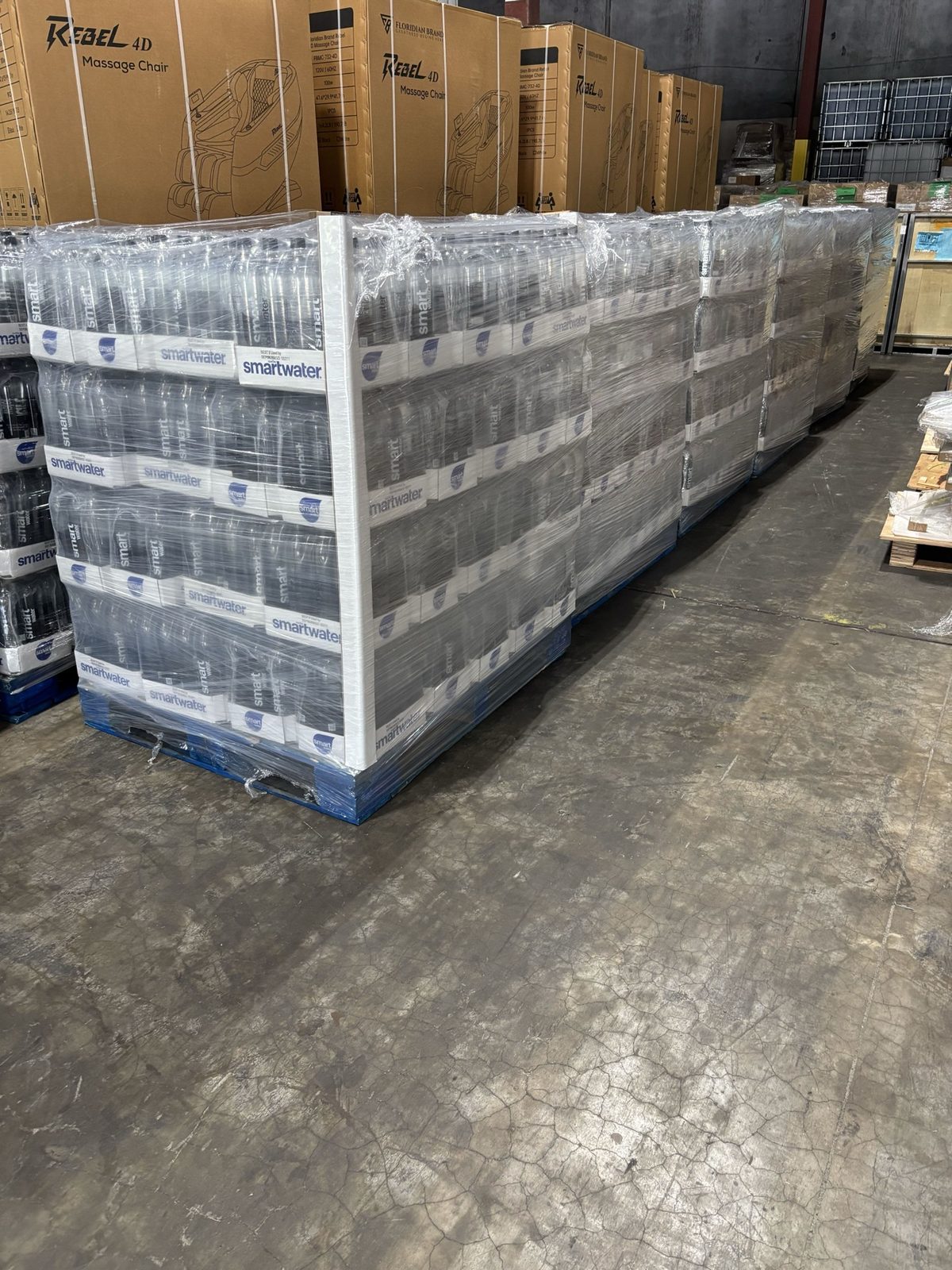
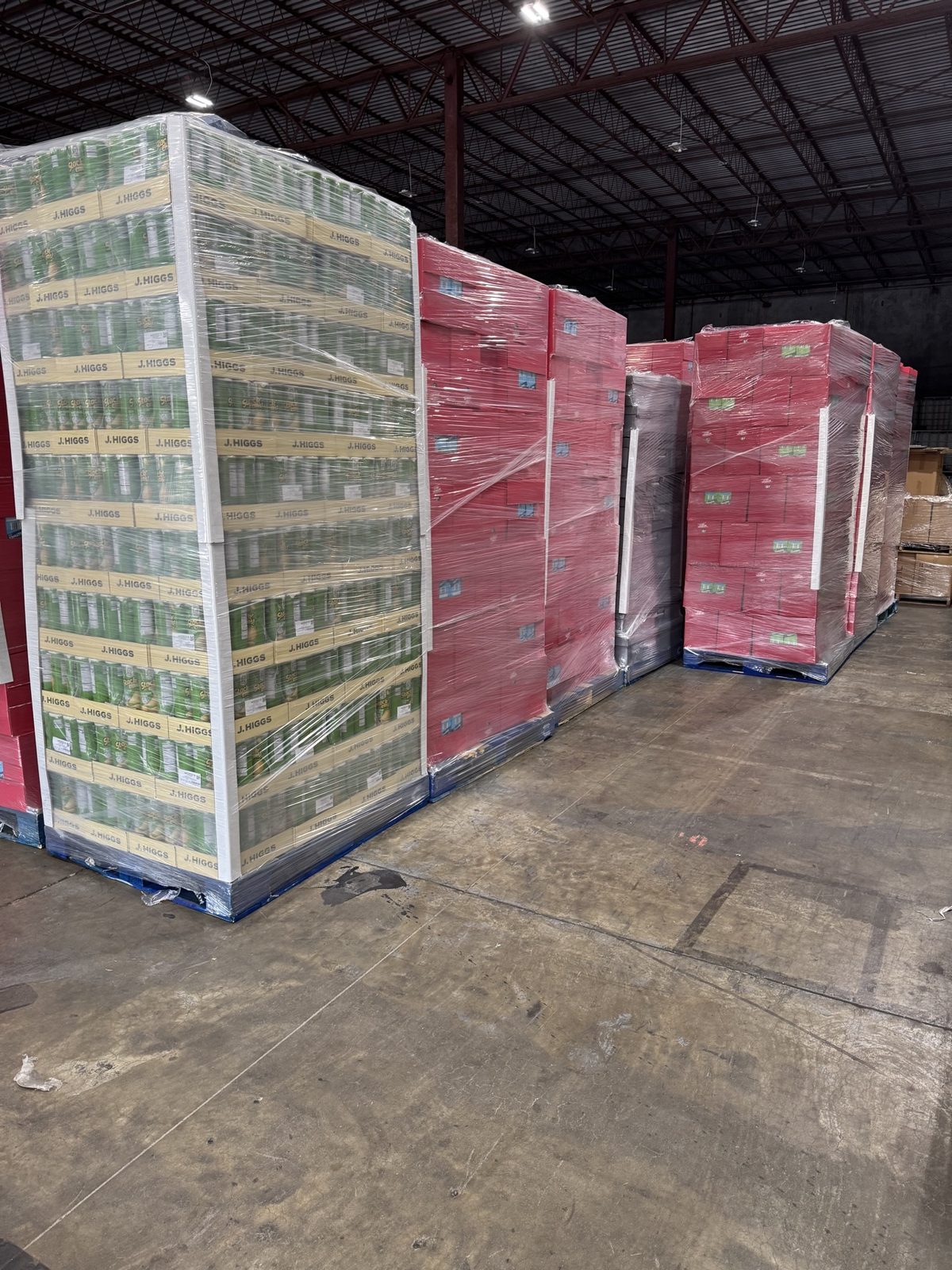
A transload moves freight from one form of transport to another, usually from an ocean container into domestic trucks, or from one trailer setup into another that fits the next leg. The crew opens the container or trailer, unloads it, checks the freight, sorts it, builds it to pallets where needed, and reloads it to outbound dry vans or holds it for the next move.
The starting condition of the load drives most of the work. A floor-loaded container has freight stacked loose on the floor, and the crew unloads it by hand, piece by piece, then builds it to pallets. An industry guide puts a floor-loaded 40 foot container at 3 to 5 hours of manual unloading. A palletized container arrives with freight already on pallets, and a forklift can pull it out much faster. The same industry guide puts a palletized container at 30 to 60 minutes by forklift. Those are guides, not warehouse data, and the actual time depends on the freight, the piece count, and the condition of the load when the doors open.
Pallet counts follow the same guide logic. A 40 foot container builds to about 20 pallet positions, and a 20 foot container builds to about 10 pallet positions, as an industry guide. Heavy items, odd shapes, and mixed freight can change the count, so tell the warehouse the item sizes and piece counts up front.
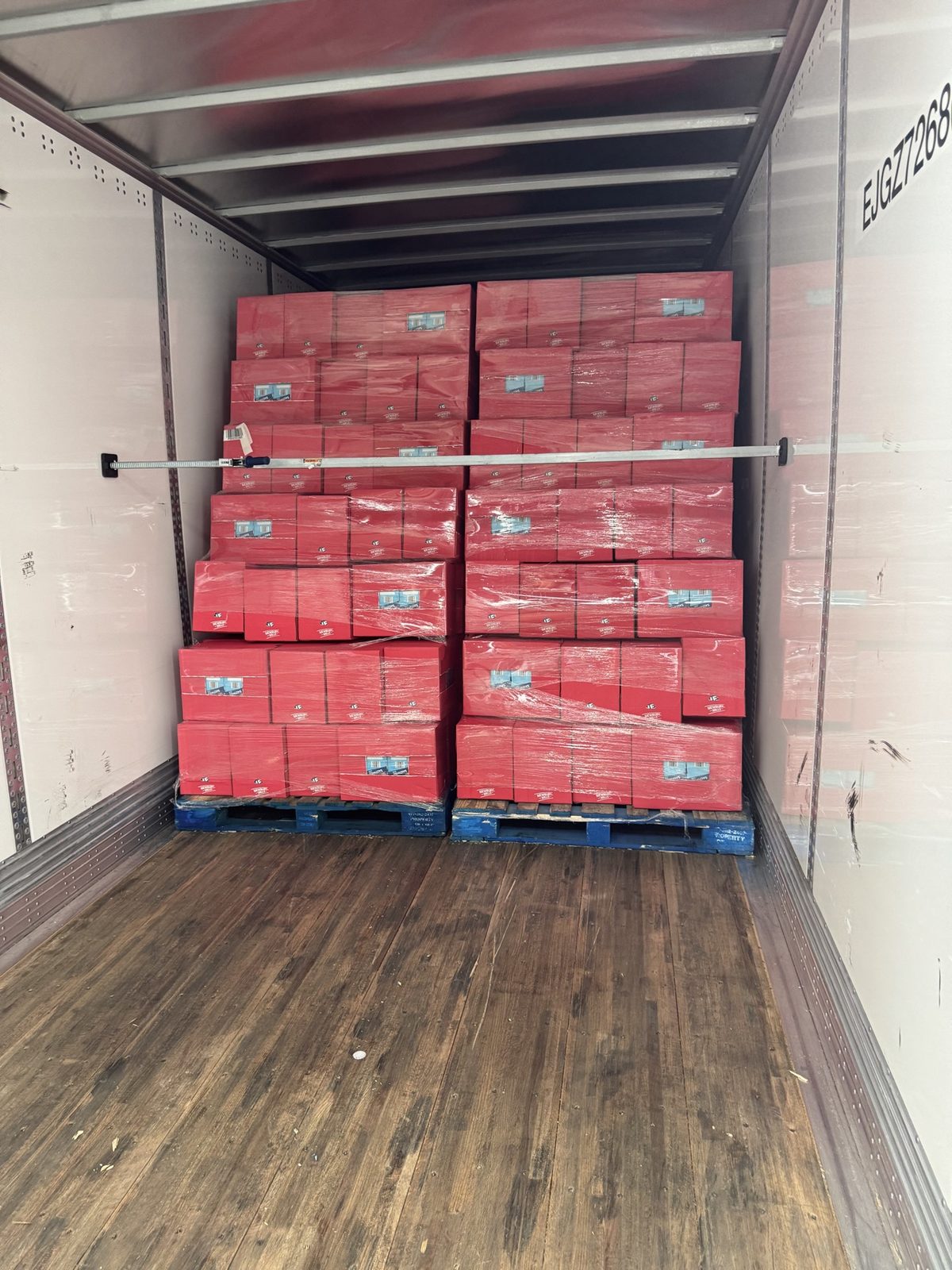
The reload step needs the same care. A transload often reloads container freight into 53 foot domestic vans. Three 40 foot containers into two 53 foot vans holds only for lightweight palletized freight. A loose-loaded 40 foot container built to pallets can take two dry vans on its own. Heavy palletized freight weighs a dry van out before it cubes out, which means the van hits its weight limit before it fills up. Never treat the three into two ratio as a safe assumption. Give the warehouse the weight and the pallet count so it can work out the real outbound trailer count.
After the reload, the freight may go straight out, sit for a short hold, split to several destinations, or move to a primary warehouse for distribution. Short-term storage, cross-docking, container unloading, and restack are related jobs with their own timing and quote details, so the transload quote should say which outcome the load needs.
One load, several Piedmont destinations
A single container often serves more than one customer in the Piedmont. One load may need to split to a Charlotte customer, a Triad customer, and a Triangle customer, or to several stops in one metro area. Split delivery is covered by the listed warehouses, as long as the split is raised during the quote process so the warehouse quotes the proper scope of work.
When splits are part of the job, lay out the full scope in the first message. Name every destination, with the pallet count for each destination. Say whether the warehouse should arrange the outbound trucks or whether the shipper will arrange its own trucks. Outbound transport is priced per truckload or per pallet depending on load details and the warehouse’s rate structure, so the warehouse cannot price the outbound leg without the destination list and the pallets per destination.
A split also changes the dock plan. The crew needs to know which pallets go to which truck, in what order, and whether any destination has its own appointment window or delivery rule. A load that arrives with the full split scope can be unloaded, sorted, and reloaded to the right trucks in one pass.
The charges running while the load waits
Two different clocks can run on a load, and shippers sometimes mix them up. Demurrage is the charge for keeping a container at the terminal past its free time. Detention, also called per diem in this context, is the charge for keeping the container or chassis out past its free time. Both clocks start from the carrier or terminal terms for that specific box, and both need to be read from the actual paperwork for the load.
National guides put free time at about 4 days, demurrage at about 200 to 400 dollars per day, and per diem at about 75 to 200 dollars per day. Those are national guides only. They are not a Wilmington terminal tariff, and they are not a North Carolina warehouse rate. Do not use them to budget a specific load. Get the Last Free Day in writing from the carrier or terminal, put it in the quote request, and let the warehouse plan the appointment around it.
The inland leg adds its own timing pressure. A box that waits at the terminal while a Piedmont appointment is sorted out burns free time. Pick the city and contact the warehouse early, before the clock is already running. Warehouse hold charges are separate from terminal charges, and no warehouse rate or hold term is stated here, because those specifics vary by warehouse and by load. Confirm them with the listing when the quote comes back.
What shapes the quote
No two transload quotes for similar looking boxes are the same, because the work inside the box is rarely the same. The warehouse prices the job it actually has to do, not the box size alone.
Pallet count and piece count come first. More pallets mean more forklift moves, more wrap, and more outbound trailer space. Floor-loaded freight costs more crew time than palletized freight, because the crew builds every pallet by hand. An industry guide puts floor-loaded unload labor at 300 to 600 dollars and palletized unload labor at 50 to 150 dollars, as the warehouse’s cost, not as what the client pays. That gap is a guide, not a quote, but it shows why the starting condition of the load matters so much.
Sort and rework add time. Mixed SKUs that need to be sorted by destination, damaged freight that needs to be separated, and loads that need labels or special handling all add touches. Heavy or oversized items add their own questions about equipment and dock space, so name them in the first message rather than letting the crew find them when the doors open.
Hold length and outbound touches come next. A straight reload to one truck is the simplest outbound move. A hold followed by several outbound moves, a split, or a transfer each add handling. Listings on this directory require appointments and are open Monday to Friday, closed Saturday and Sunday, so plan the arrival for a weekday and confirm the appointment before the truck rolls. The warehouse also needs to know which inland leg the box is on, so the appointment lines up with the actual arrival.
What to send so the first reply is usable
Quote requests go directly to the warehouse, and a warehouse normally replies within 24 hours or less. A complete first message gets a usable reply. A thin first message gets a round of follow-up questions while the box keeps moving.
Send this in the first message:
- Container or trailer size and type, and whether the load is floor-loaded or palletized
- Weight and dimensions of the items, or an itemized pack list
- Pallet count if known, or piece count and item sizes so the warehouse can estimate pallets
- Gateway and inland leg: Wilmington, Charleston, or Savannah, and rail or truck dray to the warehouse city
- Last Free Day in writing from the carrier or terminal, where it applies
- Warehouse city picked for the job, and the next move after the transload: straight reload, short hold, split, or transfer
- Every destination and the pallets per destination, if the load splits
- Who arranges outbound trucks: the warehouse or the shipper
- Heavy, oversized, or special handling items, named plainly
- Target arrival date and whether same-day or next-day turn is needed
Same-day turn is often possible based on availability, and next-day turn is commonly doable, but neither is a promise for a specific load. Contact the warehouse in advance and confirm the appointment. Never show up unannounced. A confirmed appointment, a complete packet, and a box that arrives as described are what make a fast turn possible.
Find the warehouse on the map
The job now is simple. Name the city from the delivery map, name the gateway and the inland leg, and send the full packet to a listed warehouse in that city. Each listing page carries that warehouse’s own service tags and contact route. Check the listing for the services the load needs, and confirm any service that is not tagged before booking around it.
Start here: https://transloadnow.com/regions-we-serve/find-a-warehouse-in-north-carolina/
Warehouse operators reading this page can learn about joining the directory on the partner page: https://transloadnow.com/about/become-a-partner/
Related North Carolina guides: Short-term storage, Cross-docking, Container unloading, and Pallet restacking.
Frequently asked questions
A transload moves freight from an ocean container into domestic trucks, or from one trailer setup into another that fits the next leg. The crew unloads the container, checks the freight, sorts it, builds it to pallets where needed, and reloads it to outbound dry vans or holds it for the next move. In North Carolina the devan work usually happens inland, in the Piedmont or in the west, after a rail leg or truck dray from Wilmington, Charleston, or Savannah. A floor-loaded 40 foot container takes about 3 to 5 hours to unload by hand as an industry guide, while a palletized container takes about 30 to 60 minutes by forklift as an industry guide. A 40 foot container builds to about 20 pallet positions and a 20 foot container to about 10, as industry guides.
Pick by the delivery map. Charlotte fits freight distributing across the Carolinas and the Southeast and freight arriving by rail to the Charlotte Inland Terminal. The Triad, Greensboro, Lexington, and Winston-Salem, fits central North Carolina distribution and loads with several Piedmont stops at the I-40 and I-85 crossroads. Durham fits Triangle deliveries and freight heading east or north on I-95 after the transload. Fletcher fits western North Carolina and freight coming up from Charleston on I-26 toward Asheville. No listing sits at the port or on the coast, so the city choice is about the next move, not the port of entry.
Wilmington is the North Carolina container gateway, with CSX on-dock rail and Interstates 40 and 95 serving the port. Volume was 289,000 TEUs in fiscal year 2024-25. NC Ports’ strategic plan projects 193,000 TEUs for the current fiscal year, a tariff-driven projection, not an actual. From Wilmington, freight moves by the Queen City Express rail service to Charlotte or by truck dray on I-40 to the Triad and the Triangle. Charleston fits Piedmont freight moving I-26 to I-77 into Charlotte, and Savannah fits freight moving I-95 to I-26 to I-77 into Charlotte or I-95 and I-40 into the eastern Piedmont. Morehead City is a bulk and breakbulk port only, not a container option. Name the gateway in the quote request so the warehouse can plan around the inland leg the box is already on.
Same-day turn is often possible based on availability, and next-day turn is commonly doable. The actual turn depends on the appointment, the crew schedule, whether the load is floor-loaded or palletized, and whether the outbound trucks are ready. Listings require appointments and are open Monday to Friday, closed Saturday and Sunday. Contact the warehouse in advance, confirm the appointment, and never show up unannounced. Sending the full packet early, with the Last Free Day where it applies, gives the warehouse the best chance to fit the load into the dock plan on the day it arrives.
Pallet count and piece count, floor-loaded versus palletized starting condition, sort and rework touches, hold length, outbound touches and trailer count, split destinations, and heavy or oversized items all shape the quote. No warehouse rate is printed here, because rates and terms vary by warehouse and by load. Trailer count deserves special care. Three 40 foot containers into two 53 foot vans holds only for lightweight palletized freight. A loose-loaded 40 foot container built to pallets can take two dry vans on its own, and heavy palletized freight weighs a dry van out before it cubes out. Give the warehouse the weight, dimensions, and pallet count so the outbound plan is based on the real load.
Send a complete packet straight to the warehouse, which normally replies within 24 hours or less. Include the container or trailer size and type, whether the load is floor-loaded or palletized, and the Weight and dimensions of the items, or an itemized pack list. Add the pallet or piece count, the gateway and inland leg, the Last Free Day in writing where it applies, the warehouse city, and the next move after the transload. If the load splits, name every destination with the pallets per destination, and say whether the warehouse or the shipper arranges the outbound trucks. Name heavy or oversized items plainly, and give the target arrival date and the turn needed.