The box lands at the coast but gets opened inland
If your ocean box is headed for Charlotte, here is the part that trips up a lot of shippers. The box lands at the coast. The doors get opened in Charlotte.
Wilmington is the North Carolina container port. It sits 26 miles up the Cape Fear River, with a 42 foot channel, 9 berths, and 7 container cranes. It handled 289,000 TEUs in fiscal year 2024-25. NC Ports’ strategic plan projects 193,000 TEUs for the current fiscal year, a tariff-driven projection, not an actual. Charleston in South Carolina and Savannah in Georgia are the other two gateways whose freight regularly ends up in Charlotte. None of that changes where the unload happens.
No listed warehouse sits at the port. The devan work happens inland, at a Charlotte area warehouse, after the box makes a rail or truck leg inland. That is why this page is Charlotte and not Wilmington. If your receiver is in Charlotte or the freight distributes from Charlotte, pick the warehouse in Charlotte and work backward from there to the port.
Start on the North Carolina map page to find a Charlotte area listing: North Carolina warehouse map. Contact the warehouse in advance. Listed warehouses need appointments, and you should never show up unannounced with a container. Send your quote request directly to the warehouse. Most warehouses reply normally within 24 hours or less.
The inland leg: rail or truck dray to Charlotte
A Wilmington box reaches Charlotte one of two ways: rail or truck dray.
The rail option is the Queen City Express, a daily double stack intermodal service from Wilmington to Charlotte. Containers are available in Charlotte less than 48 hours after vessel discharge, per NC Ports. The service runs to the Charlotte Inland Terminal, also called the Charlotte Intermodal Terminal, a dry port site owned by NC Ports on CSX lines near NC 16 and I-85. From there, the box moves the short last leg to the warehouse you picked.
The truck option is straight dray from the coast inland. Charleston freight runs I-26 to I-77 into Charlotte. Savannah freight runs I-95 to I-26 to I-77 into Charlotte. Wilmington freight can also dray inland on I-40 and then south into Charlotte. Do not pick a warehouse by which road the box traveled. Pick it by where the freight goes after the doors open.
That choice matters because the warehouse is not at the terminal. The terminal hands the box off, and the warehouse crew does the actual unload. When you send your request, say which leg you are planning, rail or dray, and when the box should be available in Charlotte. That lets the warehouse hold a dock door and a crew for you instead of guessing.
If your freight came through Charleston or Savannah, say so up front too. The warehouse does not care which port stamped the box, but the timing and the paperwork trail differ by gateway, and the warehouse can only plan around what you tell it.
The clock: get your Last Free Day in writing
The clock on your box does not start in Charlotte. It starts at the terminal, and it keeps running while the box travels inland and waits for a dock door.
Two charges drive that clock, and they are not the same thing. Demurrage is the charge for the container sitting at the terminal past its free time. Detention, sometimes called per diem, is the charge for holding the container or chassis past its free time once it has left the terminal. Both can stack up while you are still arranging the unload, which is why the inland leg needs a plan before the vessel berths, not after.
Do not take a day count or a dollar figure for Wilmington free time from this page, because none is printed here. Terminal terms vary by carrier and terminal, and a figure that was right for one box can be wrong for the next. Get your Last Free Day in writing from your carrier or terminal, and put that date in your quote request. That one date tells the warehouse how much room you have and whether the job needs to move to the front of the line.
National guides give a rough sense of scale only, and they are not Wilmington terms. Those guides put free time around 4 days, demurrage around 200 to 400 dollars per day, and per diem around 75 to 200 dollars per day. Treat those as background for planning, not as your bill. Your written Last Free Day is the number that counts.
Same day unloading is often possible based on availability, and next day is commonly doable. Neither is a promise. The tighter your Last Free Day, the earlier you should contact the warehouse. A request sent the day the box is already sitting in Charlotte leaves the warehouse no room to help you beat the clock.
One Charlotte box, three places the freight goes next
Once the box is empty, the freight has to go somewhere. Most Charlotte unloads end up in one of three places, and the warehouse plans the job differently for each.
First, the freight can stay near Charlotte. It gets built to pallets, checked, and held as palletized stock until the receiver is ready or the next truck is booked. If you need short-term storage after the unload, confirm storage with the listing before you send the box inland. Not every listing tags storage, and the warehouse can only hold what it has room and a tag for.
Second, the freight can split to Piedmont stops. One inbound box can feed several destinations around Charlotte and the wider Piedmont. Split delivery is covered by the listed warehouses, as long as the split is raised during the quote process so the warehouse quotes the proper scope of work. Explain the full scope in that first message: every destination, and the pallets per destination. The warehouse may arrange outbound trucks, or you may arrange your own. Outbound is priced per truckload or per pallet depending on load details and the warehouse’s rate structure. A split the warehouse learns about after the box is open is a split that costs extra touches and extra time.
Third, the freight can reload straight to outbound trucks. The box gets unloaded, the freight gets sorted and palletized, and it goes back out on dry vans toward its final stops. That is the core of a transload, and you can read the wider picture in Transloading in North Carolina.
One guardrail applies to that reload math. Three 40 foot containers into two 53 foot trailers holds only for lightweight palletized freight. A loose loaded 40 foot container built to pallets can take two dry vans on its own. Heavy palletized freight weighs a dry van out before it cubes out. Never treat the three into two ratio as a safe assumption. Tell the warehouse the weight and the pallet count, and let it work out the trailer count from the real load.
What the crew finds when the doors open
Not all containers unload the same way, and the difference shows up in time, labor, and price.
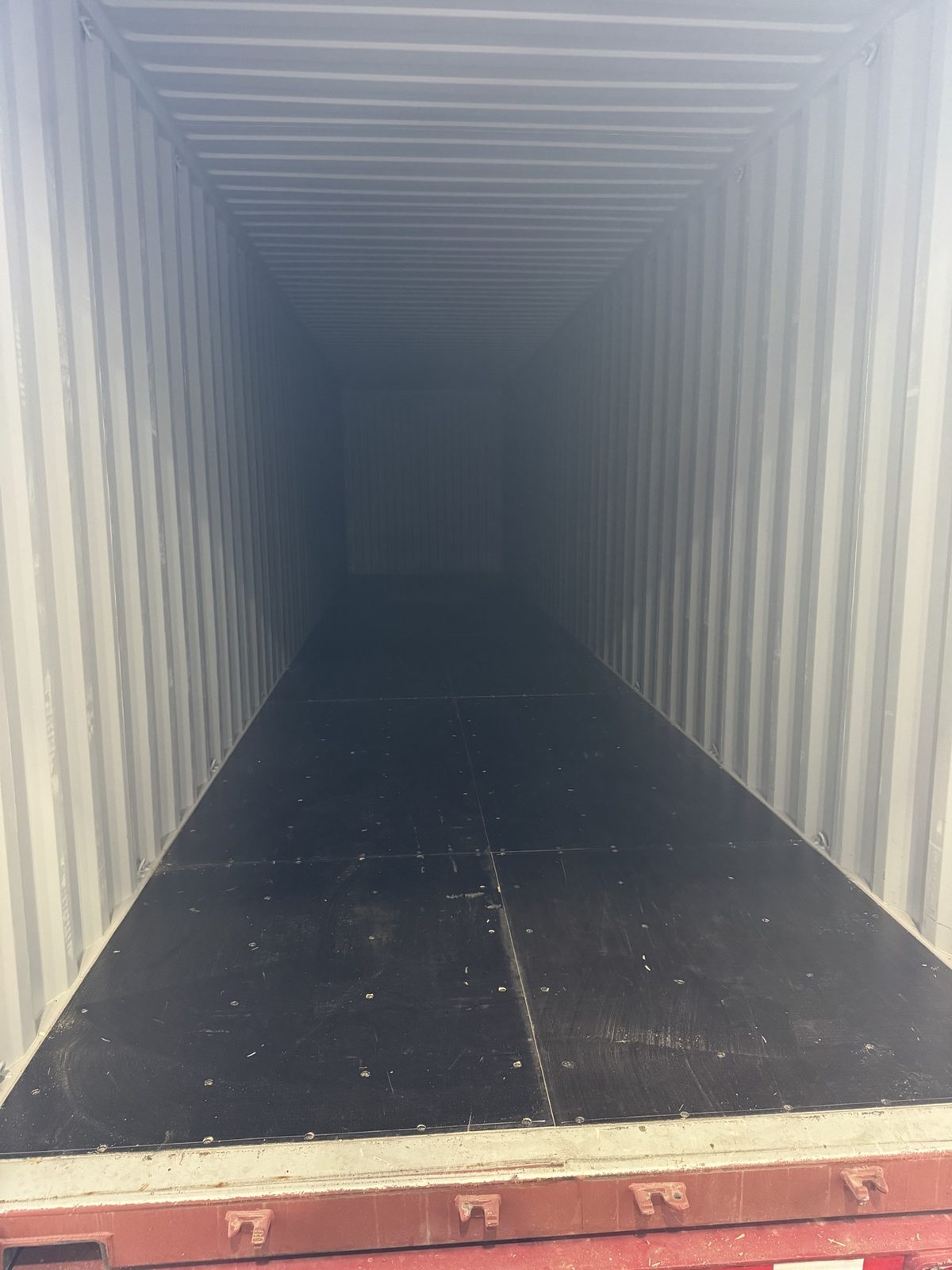
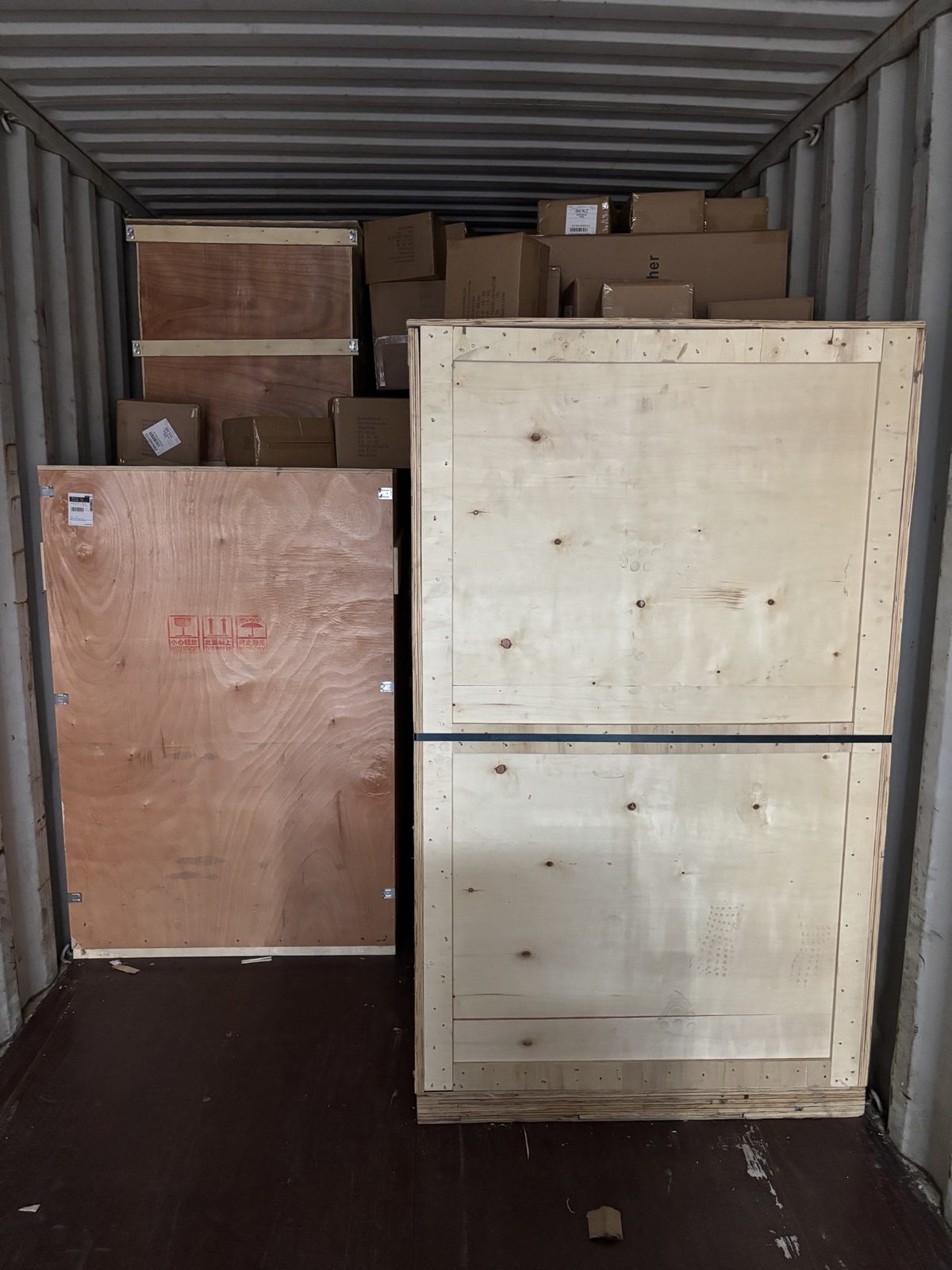
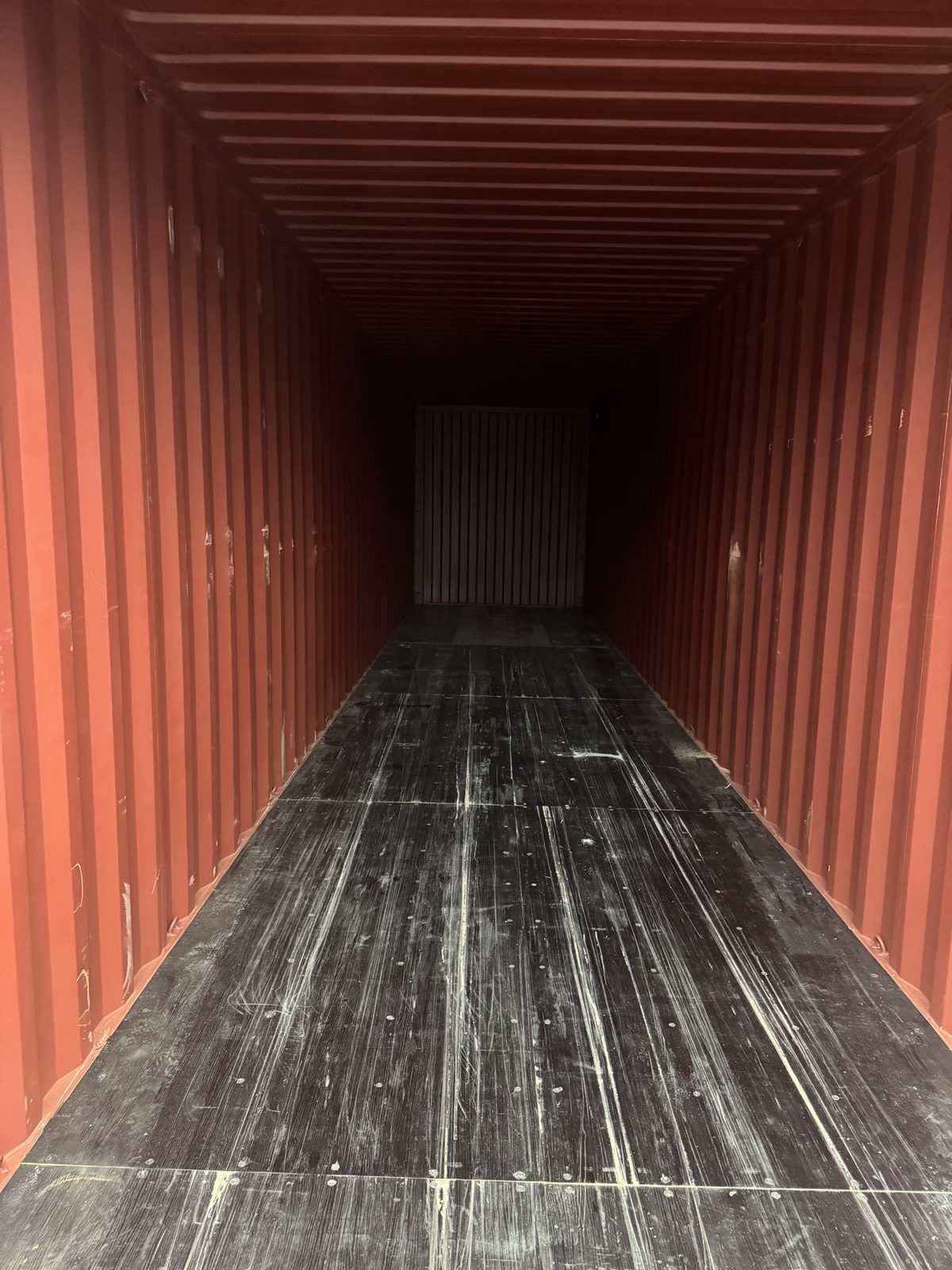
A floor loaded container is freight stacked loose on the container floor, with no pallets under it. The crew unloads it by hand, builds it to pallets as it comes out, and wraps what needs wrapping. As an industry guide, a floor loaded 40 foot container takes 3 to 5 hours of manual unloading. That guide describes the work, not any one warehouse’s speed, and your load can run faster or slower depending on what is inside.
A palletized container is freight already on pallets. The crew pulls pallets out with a forklift, checks them, and stages them. As an industry guide, a palletized container takes 30 to 60 minutes by forklift. The gap between those two guides is the reason the warehouse asks how the box was loaded before it quotes. Floor loaded means hands and hours. Palletized means forks and minutes.
As another industry guide, a 40 foot container builds to about 20 pallet positions, and a 20 foot container builds to about 10. Those are planning figures, not a count of your load. Light, bulky freight cubes out before it weighs out. Dense freight does the opposite. Mixed freight does a bit of both, and the warehouse will not know your true pallet count until it sees the pack list or opens the doors.
Heavy or oversized items are a direct question, not a footnote. If any piece is heavy, long, awkward, or needs special handling, say so in the first message. The same goes for freight that needs food grade handling, temperature control, or hazmat handling. Confirm each of those with the listing, because handling varies by warehouse. A crew that learns about a 2,000 pound crate at the dock door is a crew that has to stop and replan.
Damage and shifting also come out at the doors. If cartons are crushed, pallets are leaning, or the load shifted in transit, tell the warehouse what you know and send photos if you have them. The crew can sort, repalletize, and set aside damaged freight, but it can only plan that work if it knows it is coming.
Send one message the warehouse can quote from
The fastest quotes come from complete first messages. A short message with the right details beats three rounds of follow up questions, and it matters more when the Last Free Day is close.
Send the warehouse this:
- Box size and type: 20 foot or 40 foot, standard or high cube, and whether the freight is floor loaded or palletized.
- Gateway and inland leg: Wilmington, Charleston, or Savannah, and whether the box moves by Queen City Express rail or truck dray.
- Last Free Day in writing from your carrier or terminal, plus the date the box should be available in Charlotte.
- Weight and dimensions of the items, or an itemized pack list.
- What happens after the unload: hold near Charlotte, split to Piedmont stops, or reload to outbound trucks. For a split, list every destination and the pallets per destination.
- Heavy, oversized, food grade, temperature controlled, or hazmat needs, if any, so the warehouse can confirm it can handle them.
- Your next destination and timing: where the freight goes next, and when the receiver or outbound truck needs it.
Send that request directly to the warehouse from its listing. Most warehouses reply normally within 24 hours or less. If your Last Free Day is within a day or two, say so in the subject line or first sentence so the warehouse can triage it. Contact the warehouse in advance for every load, and never send a driver to a warehouse unannounced.
Why two boxes that look alike get different quotes
No rate is printed on this page, and that is deliberate. Two 40 foot boxes from the same port can quote very differently, because the quote follows the work, not the box size.
Floor loaded versus palletized is usually the biggest driver. Hand unloading and building pallets takes crew hours. Forklift unloading of ready pallets takes far less. Pallet count matters next, because more pallets mean more touches, more wrap, and more staging space.
Weight and shape matter too. Heavy freight slows the unload and can change the outbound trailer count. Oversized pieces can need extra hands or equipment. Mixed freight that needs sorting by SKU or destination takes longer than a single SKU load that goes straight to one stack.
Timing matters as well. A box with a comfortable Last Free Day can take a normal dock slot. A box with a day left needs a crew moved around, and that urgency shows up in the quote. So does the outbound plan. A straight hold is simpler than a split to several stops, and a split with trucks the warehouse arranges is priced differently from a split where you arrange your own trucks.
None of this means a higher quote is a bad quote. It usually means more work is hiding inside the box. The way to compare quotes is to compare them on the same scope: same pallet count, same unload method, same outbound plan, same timing. Send every warehouse the same complete packet, and the quotes you get back will actually be comparable.
Frequently asked questions
At a Charlotte area warehouse listed on the North Carolina map, not at the port. The box lands at Wilmington, Charleston, or Savannah, travels inland by Queen City Express rail to the Charlotte Inland Terminal or by truck dray, and then goes to the warehouse for the unload. Pick the warehouse by where the freight goes after the doors open, and contact it in advance to book the dock time.
A floor loaded container holds freight stacked loose on the container floor, so the crew unloads it by hand and builds it to pallets as it comes out. As an industry guide, a floor loaded 40 foot container takes 3 to 5 hours of manual unloading. A palletized container holds freight already on pallets, so the crew pulls pallets out with a forklift. As an industry guide, that takes 30 to 60 minutes. The warehouse needs to know which kind your box is before it can quote time or labor.
Three common paths: the freight holds near Charlotte as palletized stock, it splits to Piedmont stops, or it reloads to outbound trucks. For a split, raise it in the quote request and explain the full scope up front, with every destination and the pallets per destination. The warehouse may arrange outbound trucks, or you may arrange your own. Outbound is priced per truckload or per pallet depending on load details and the warehouse’s rate structure.
Contact the warehouse as soon as you know the box is coming, and always in advance of arrival. Same day unloading is often possible based on availability, and next day is commonly doable, but neither is guaranteed. The closer your Last Free Day, the earlier you should reach out. Never send a driver to a warehouse unannounced. Appointments are required, and a booked dock door is what keeps your box from waiting.
It can, as long as the split is raised during the quote process so the warehouse quotes the proper scope of work. Send the full split scope in your first message: every destination and the pallets per destination, plus who arranges the outbound trucks. A split planned before the box opens moves faster and quotes cleaner than a split decided after the freight is already on the floor.
Send one complete message directly to the warehouse: box size and type, floor loaded or palletized, gateway and inland leg, Last Free Day in writing from your carrier or terminal, weight and dimensions of the items, or an itemized pack list, what happens after the unload, any heavy, oversized, food grade, temperature controlled, or hazmat needs, and your next destination and timing. Most warehouses reply normally within 24 hours or less.
Find a Charlotte warehouse on the North Carolina map
Start with the North Carolina warehouse map and pick a Charlotte area listing that fits your load. Send it the complete packet above, with your Last Free Day in writing and your outbound plan included. The warehouse that gets the full picture first is the warehouse that can give you a usable quote first.