Somewhere on I-10 east of the California line, a driver is watching the miles to Phoenix tick down. The box behind him cleared the coast hours ago. It needs no home in a Phoenix warehouse. It needs a dock, a crew, and a truck heading out again before the day is done.
This page follows one load through that day, from the call before the truck rolls to the last outbound trailer pulling away. Read it once and you should be able to send a quote request that gets a real answer back.
Before the truck reaches the West Valley
The day starts before the truck arrives, with three decisions that shape everything after them.
First, name the port the box cleared. No ocean ship docks in Arizona, so every ocean box bound for a Phoenix dock starts at a coast port and finishes the trip over land. For most loads that port is Los Angeles or Long Beach. Los Angeles moved 10,239,318 TEUs in 2025, and Long Beach moved 9,881,595 TEUs, a record for that port. Together that is about 20.1 million TEUs between them in one year, and a share of it rides I-10 east to Phoenix. Tell the warehouse which port stamped your box, and how it is traveling now. A drayed container and a transloaded 53-foot trailer are different arrivals at the dock, and the crew plans the doors, the labor, and the outbound trucks around how the freight arrives, so put it in your first message rather than a follow-up.
Some freight comes up from Nogales instead, over the Mexican border. That lane matters for the state as a whole, and it can matter for a Phoenix cross-dock too if your load crossed at Nogales and is heading north. Say so plainly in your first message. The warehouse needs the starting point to judge the arrival time and the paperwork riding with the load.
Second, settle the move: live unload or drop trailer. A live unload keeps the driver at the door while the crew works, so the inbound trailer, the sort, and the outbound loads all happen in one visit. It fits when the outbound trucks are already set and the timing is tight, and it means the driver is on the clock at the dock, so a clear door time matters more. A drop lets the driver leave the trailer and move on to the next job. The crew works the load when the dock has room and loads the outbound trailers as they show up. It fits when the inbound truck gets in ahead of the outbound trucks, or when the arrival time is loose. The warehouse still needs an appointment for a drop, and it still needs to know when the trailer will show up.
Third, lock in the door time. Every listed warehouse works by appointment, so the door time gets set before the truck rolls, not after it arrives. Same-day appointments are often possible based on availability, and next-day appointments are commonly doable, but neither one is a promise. The warehouse can only hold a door and a crew when it knows the load is coming. Do not send a truck without a confirmed door time.
Put the move, the driver, and the load type in your first message. A quote built for a live unload will not hold for a drop, and a quote built for palletized freight will not hold for a loose load.
The door opens: check-in and the first look
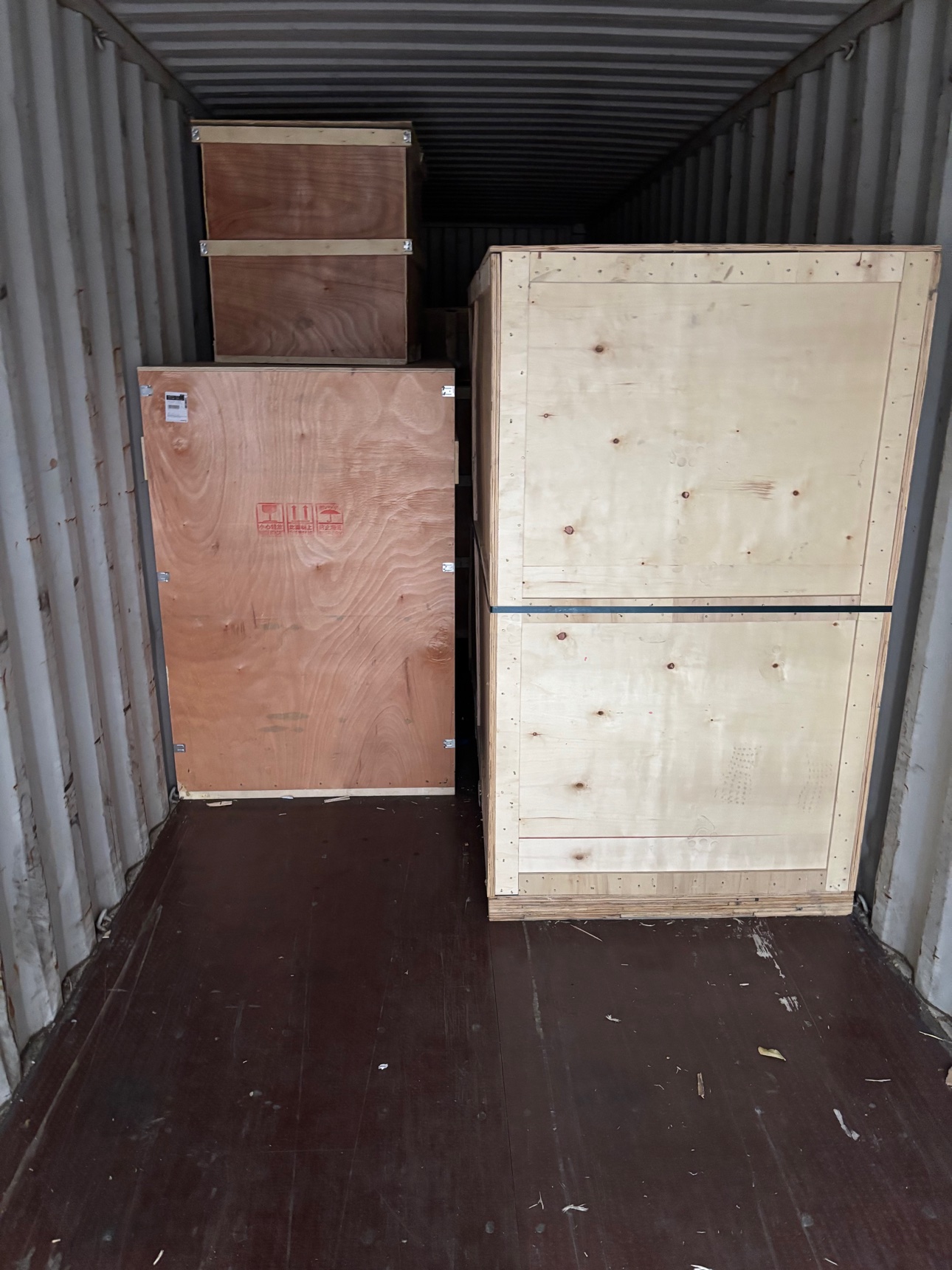
The inbound trailer or container arrives at its agreed door time and backs to a door. The crew checks the load against the pack list or the bill of lading and notes any damage or short count before anything moves. That check is the first look, and it sets the rest of the day. A clean count means the sort can start at once, and a short count means the warehouse calls you before the pallets start moving.
Unload and build: where the clock runs fastest
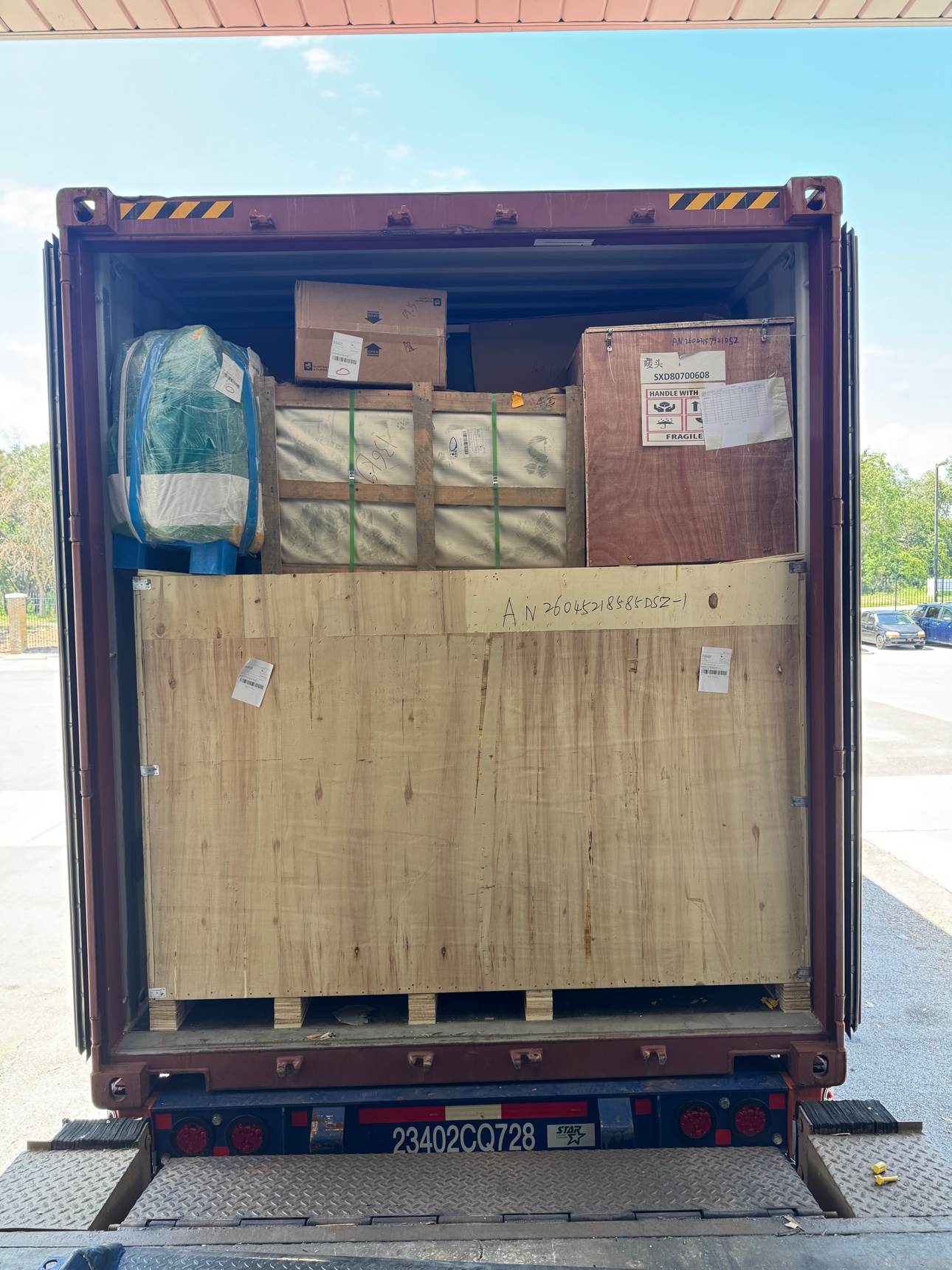
Palletized freight comes off on a forklift, pallet by pallet. Floor-loaded freight comes off by hand or with a conveyor, and it usually gets built onto pallets as it comes off. That build step takes crew time, so the warehouse needs to know in advance whether your freight arrives on pallets or loose on the floor.
The build step is where a loose load eats the most crew time, and it is the reason the warehouse asks how the box was loaded before it puts a number on the job. A hand crew building pallets piece by piece works far slower than a forklift pulling ready pallets, and that gap lands in the quote.
Sort by where the freight is going, not where it came from
Once the freight is off, the crew sorts. Pallets get grouped by outbound destination, and any sorting, labeling, or wrapping you asked for happens here. This is the step where a missing destination list costs real time. A crew that does not know where each pallet goes has to stop and ask, and every outbound truck waits on the answer.
One inbound load can feed several outbound trailers, each bound for a different stop: a few pallets up I-17, a few more east on I-10 toward Tucson, the rest to a receiver in the metro or on to another state.
Give the warehouse the whole split up front: every stop, and how many pallets ride to each one. When the crew knows the full split before the first pallet comes off, each pallet lands on the right outbound trailer the first time. A split that shows up in pieces means pallets get moved twice and trucks wait.
Split delivery is standard work for every listed warehouse here. The warehouse can book the outbound trucks, or you can book your own and hand over the pickup details with the quote request. If you book your own outbound carriers, give the warehouse the delivery appointments for each destination too. The outbound leg prices by the truckload or by the pallet, depending on the load and how the warehouse sets its rates. That is why the destination list matters to the number: each outbound trailer is another loading pass, and each destination adds handling and coordination. A quote that names one destination does not cover a three-destination split.
Counting the outbound trailers before you need them
The trailer count is the part shippers most often get wrong, so work it from the load itself, not from a shortcut.
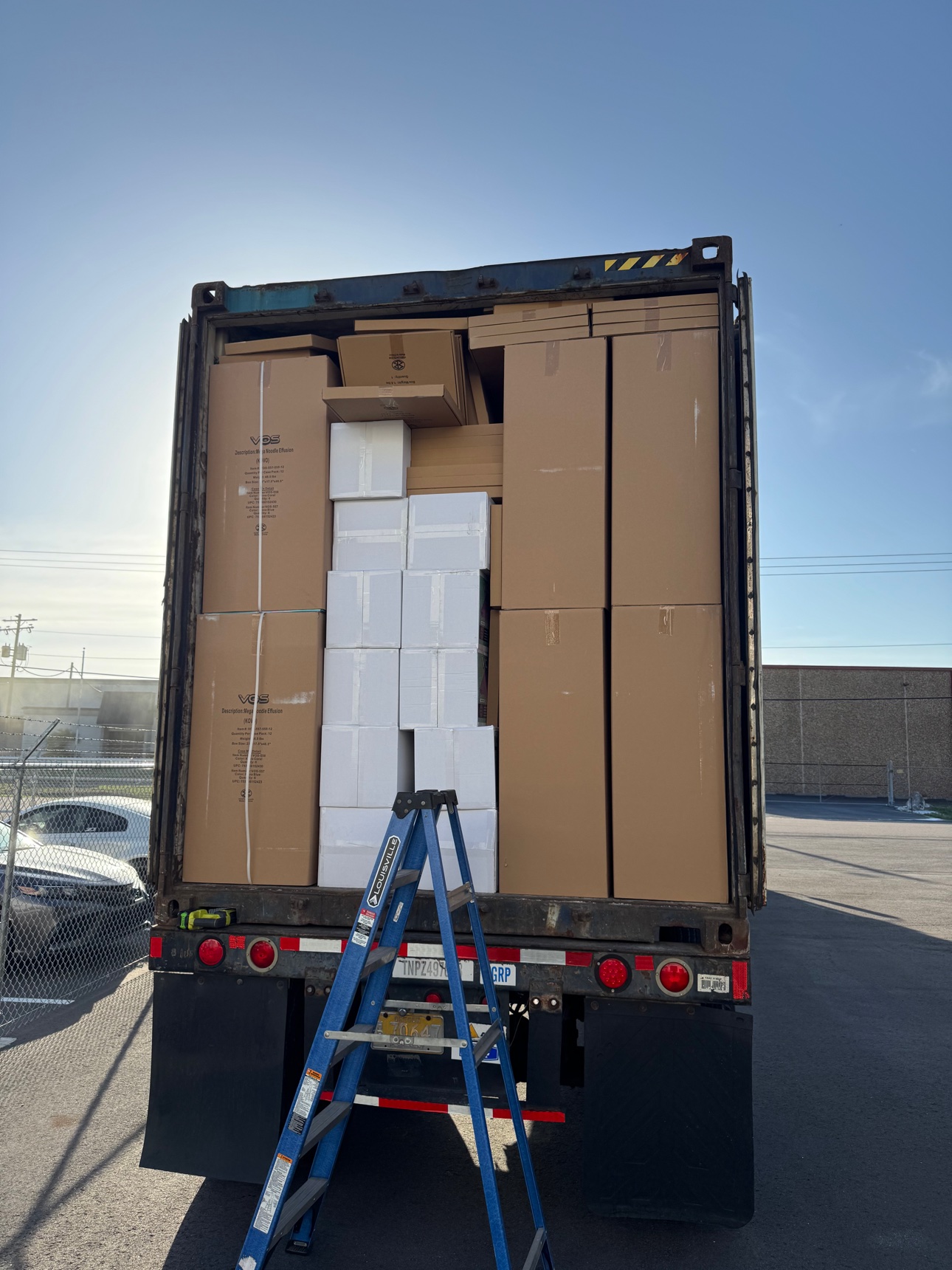
A 40-foot box that arrived loose, once the crew has built its freight onto pallets, can need two dry vans all by itself. Three 40-foot boxes of light palletized freight can squeeze into two 53-foot trailers, and that only holds when the freight is light and already on pallets. Treat that three-into-two swap as a rough guide at best, never as a promise for your load. Freight that is heavy on pallets hits the weight limit on a dry van long before the trailer runs out of room.
Give the warehouse the weight and the pallet count and let it count the trailers from the load itself. If the freight is already on pallets in the container, say so. If it is loose, say so and say what is in it. Crew time, pallet need, and the quote all change with that answer.
Outbound: the last trailer sets the day
Each outbound trailer takes its own pallets, loaded in the order that makes the delivery stops work. The driver checks the count, signs, and rolls.
Nothing that comes in on a cross-dock gets put away as stock. It is on its way out again the same day or the next. If your freight needs to sit for days or weeks while a receiver gets ready, that is storage, not a cross-dock, and you should ask for short-term warehouse space instead.
An outbound truck can run late, and it usually happens on the busiest day. A driver gets held up on I-10, a receiver pushes a delivery appointment, or an outbound trailer shows up with the wrong equipment. Sort out the late-truck plan before the freight arrives, while there is still time to change it, not after the pallets are already on the floor.
Call the warehouse the moment you know a truck will miss its slot. A few hours of notice gives the warehouse room to move the dock plan, keep the sorted freight together, and book another outbound slot. Without warning, the crew has to react to a truck that is already due, and the next load in line pays for the delay.
Before the load arrives, ask where the sorted freight waits when a truck misses its slot, how the warehouse rebooks a missed slot, and what a short wait at the dock covers. A short wait at the dock while the next truck is found is not storage. It is the warehouse holding sorted freight in order until the outbound truck shows up. If the delay stretches into days, ask the warehouse what that changes.
The same goes for the inbound side. If the box is running late out of Los Angeles or Long Beach, call early so the door time can shift before another load takes the slot.
Why the West Valley sits where it does
The listed warehouses for this work sit in the Phoenix West Valley, in Glendale, Surprise, and Tolleson, and that placement is the point. Tolleson and the West Valley sit on I-10 West, the same road the freight rode in from the coast, so the dock sits on the spine instead of a detour off it.
Greater Phoenix sits inside a one-day truck haul of the LA and Long Beach ports, according to the Greater Phoenix Economic Council, cited in 3PL Bridge Phoenix market data from October 2026. Trade sources put the Los Angeles to Phoenix run at about 370 miles via I-10, and that short inland leg is why Phoenix works as a break point.
From that dock, the outbound roads fan out. I-10 runs on to Tucson and El Paso in one direction and back to Los Angeles in the other. From Phoenix, I-17 climbs north to Flagstaff and the I-40 junction. I-40 runs east and west across northern Arizona. Loop 101 rings the metro, Loop 303 reaches the West Valley industrial parks, and SR-60 cuts across the valley as another east-west option. Name your outbound direction when you ask for a quote. A load headed north on I-17 needs a different outbound plan than one headed east on I-10 toward Tucson, and the warehouse can only price the real job when it knows which way the freight is going.
Rail runs through the metro as well. Union Pacific and BNSF both serve Phoenix, and BNSF runs intermodal between Phoenix and Dallas-Fort Worth six days a week, according to 3PL Bridge market data from October 2026. Every BNSF intermodal box in the metro today passes through the Glendale facility.
What the quote is built from
No Arizona cross-dock rate is printed on this page, and no number here should be read as one. No two cross-dock quotes for the same-looking load land the same, because the quote follows the work, not the box.
The pallet count sets the size of the job first. More pallets means a longer unload, a longer sort, and a longer load-out. The number of units handled matters too. A load with many small units takes more touches than a load with a few large ones, even at the same pallet count. And loose freight eats more crew hours than palletized freight, because every piece gets handled and built onto a pallet before sorting starts.
Timing comes next. A fixed same-day window means the warehouse holds a door and a crew for your load alone and turns away other work in that slot, so it costs more than a next-day turn with room to move. A drop trailer with a flexible window is easier to fit around other work than a live unload that needs a crew standing ready at a set hour.
Handling adds up after that. Each extra handling step adds crew time: sorting by destination, rebuilding pallets, wrapping, labeling, or a count check against the pack list. Each outbound trailer is another loading pass, and each extra destination adds coordination.
One message, everything the warehouse needs
Quote requests go directly to the warehouse. A complete first message usually gets an answer back the same day or the next, and it lets the warehouse answer without a round of follow-up questions. Send the full packet in your first message.
- Inbound details: what is arriving, on what trailer or container, and when it is due
- Which port the box cleared, Los Angeles, Long Beach, Nogales, or another gateway
- Live unload or drop trailer, and whether the driver waits
- Pallet count, and whether the freight is palletized or floor-loaded
- Weight and dimensions of the items, or an itemized pack list.
- Every outbound destination, with pallets per destination
- Outbound appointments, and who is arranging the outbound trucks
- Handling needed, such as sorting, palletizing, wrapping, or labeling
- Anything about the freight that changes how the crew can handle it, such as weight, shape, fragility, or stacking limits
- A contact name and phone number for the driver and for the person who can answer questions at the dock
If you do not have the pack list yet, send the weight and dimensions instead. If you do not have exact dimensions, send the itemized pack list. One of the two lets the crew plan the pallets, the trailer count, and the labor, and neither one leaves the warehouse guessing.
Find a cross-dock warehouse on the Arizona map
Open the Arizona warehouse map, pick a listed warehouse in the West Valley, and send the full packet in one message. Every warehouse on the map is checked before it lists, so cross-dock is the baseline here, not an extra service to hunt for. Service details can change, so confirm the exact services for your load when you contact the warehouse.
Call the warehouse before the truck rolls. Do not send a load without a confirmed door time. The same map page links to the Transloading in Arizona guide, short-term warehouse space in Arizona, and pallet restacking in Arizona if the job turns out to be a different one.
Questions about cross-docking in Arizona
A cross-dock moves freight straight through the dock and back out, usually the same day or the next, and nothing gets put away as stock. Short-term storage keeps freight as palletized stock for days or weeks and ships it when the receiver is ready. If the receiver cannot take the freight yet and it needs to sit, ask for short-term warehouse space instead of a cross-dock.
Go live when the outbound trucks are already set and the driver can wait at the door while the crew works. Go drop when the inbound truck gets in ahead of the outbound trucks, or when the arrival time is loose. Tell the warehouse which move you want in your first message, along with whether the driver waits and whether the freight is palletized or floor-loaded.
Work it from the pallet count and the weight, never from the container count. A loose-loaded 40-foot box, built to pallets, can need two dry vans on its own. Three 40-foot boxes of light palletized freight can fit into two 53-foot trailers, and that only holds for light palletized freight, so treat it as a rough guide, never as a promise for your load. Heavy palletized freight hits the weight limit on a dry van before the trailer fills up. Give the warehouse the weight and the pallet count and let it count the trailers from the load itself.
Yes. Split delivery is standard work for every listed warehouse. Flag the split when you ask for the quote, so the price covers the real job, and send every destination with the pallets for each one in the first message. The warehouse can book the outbound trucks, or you can book your own and hand over the pickup details.
Send the inbound details and arrival time, which port the box cleared, live unload or drop trailer, the total pallet count and whether the freight is palletized or floor-loaded, every destination with pallets per destination, the outbound plan and who arranges the outbound trucks, and a contact who can answer questions at the dock. Weight and dimensions of the items, or an itemized pack list.
Same-day turns are often possible when the dock has room, and next-day turns are commonly doable. Neither one is promised. Contact the warehouse in advance, lock in a door time before the truck rolls, and do not send a truck without a confirmed slot. A same-day turn with a fixed window also costs more than a next-day turn with room to move, because the warehouse holds a door and a crew for your exact slot.