
The call usually comes from the cab or the dispatch desk. A Phoenix dock took one look at the trailer and sent the driver away. Or the load walked on the highway and the lean at the doors tells the story before anyone opens them. Either way the trailer cannot deliver, the clock on the driver’s hours keeps running, and the fix is a crew that rebuilds pallets inside a trailer.
This page covers where the truck needs to go, what the crew does once the doors open, what to have ready when you call, and how the invoice works before the driver pulls out. Read it once, make the call, and book a dock time.
Grocery and retail distribution centers around Phoenix run tight dock schedules, and a leaning load does not get a second look. The big grocery and retail docks around Phoenix, the kind of dock Costco and Coca-Cola run, turn a leaning load away fast, and arguing at the gate does not change it.
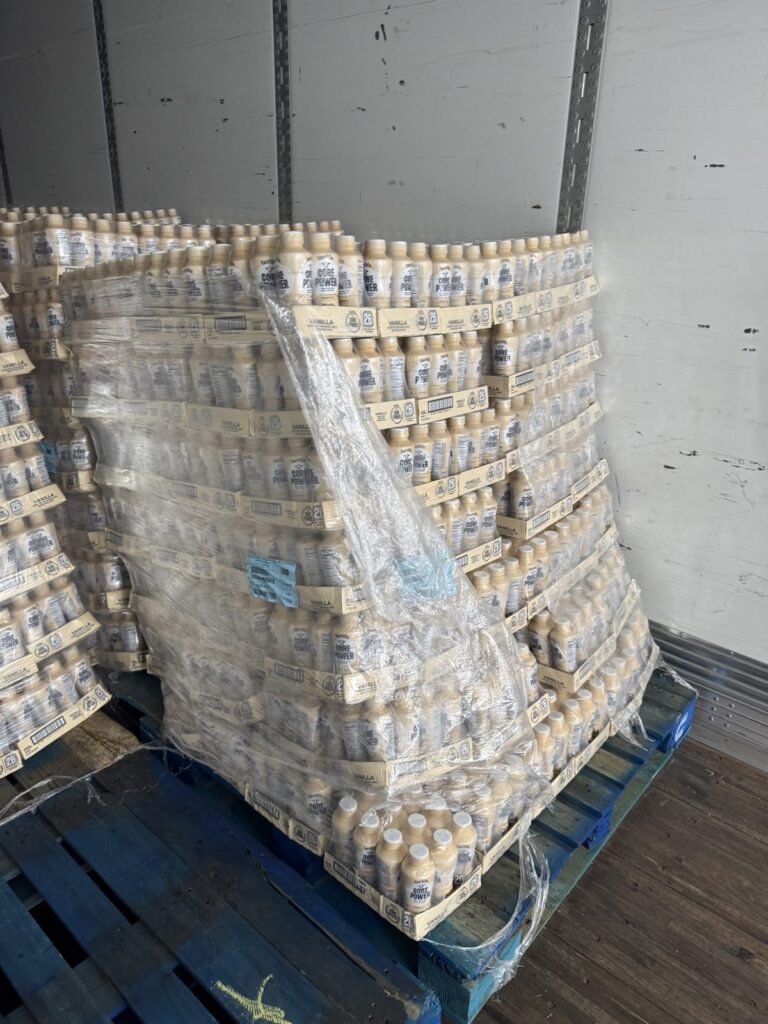
A load refused at a Phoenix dock may have ridden I-10 in from the Los Angeles and Long Beach ports before it ever reached a Phoenix dock, so by the time the truck gets refused, the driver has burned hours and no nearby dock will take the load as it sits. The answer is a rebuild, not another try at the same gate.
For the wider picture of moving freight through Arizona warehouses, see our Transloading in Arizona guide.
Wherever the truck sits in Arizona
Start from where the truck sits right now. The listed restack warehouses sit in the Phoenix West Valley, in Glendale, Surprise, and Tolleson, and the truck has to get to one of them.
On I-10 west of Phoenix, the truck is already close to the West Valley, and a refusal on the west side usually means a short move to a dock that can take the trailer. On I-10 east of Phoenix or down toward Tucson, the run is longer, so call and confirm the dock time before the driver turns around.
On I-17 coming down from Flagstaff, the truck rides straight into the north side of Phoenix. Tell the warehouse the mile marker or the exit, not just the city name. On I-40 around Flagstaff, the truck sits a long way from the West Valley, so call from Flagstaff, get the time locked in, then move.
Loop 101 and Loop 303 run through the West Valley, and a truck sitting on either loop is already in the neighborhood. Give the warehouse the loop and the nearest exit when you call, so the crew knows exactly how soon the trailer can be on the dock.
Wherever the truck sits, the first move is a phone call. Tell the warehouse the truck’s position and the refusal point, and let the crew set the dock time around both.
Why the dock turned the load away
A receiver refuses a leaning load because it cannot unload it safely or count it straight. Pallets that walked sideways press against the trailer walls, pallets that tipped put weight where the dock crew cannot reach it, and wrap tears and cartons burst.
The dock crew has a schedule to keep and other trailers waiting behind yours, and it will not start pulling freight out of a trailer that might come down on someone. No paperwork fixes a load as it sits.
A rebuild puts the load back into the shape it was loaded in. Pallets go back upright, freight goes back where it belongs, and the trailer can go back to a dock that will take it. That is the whole job.
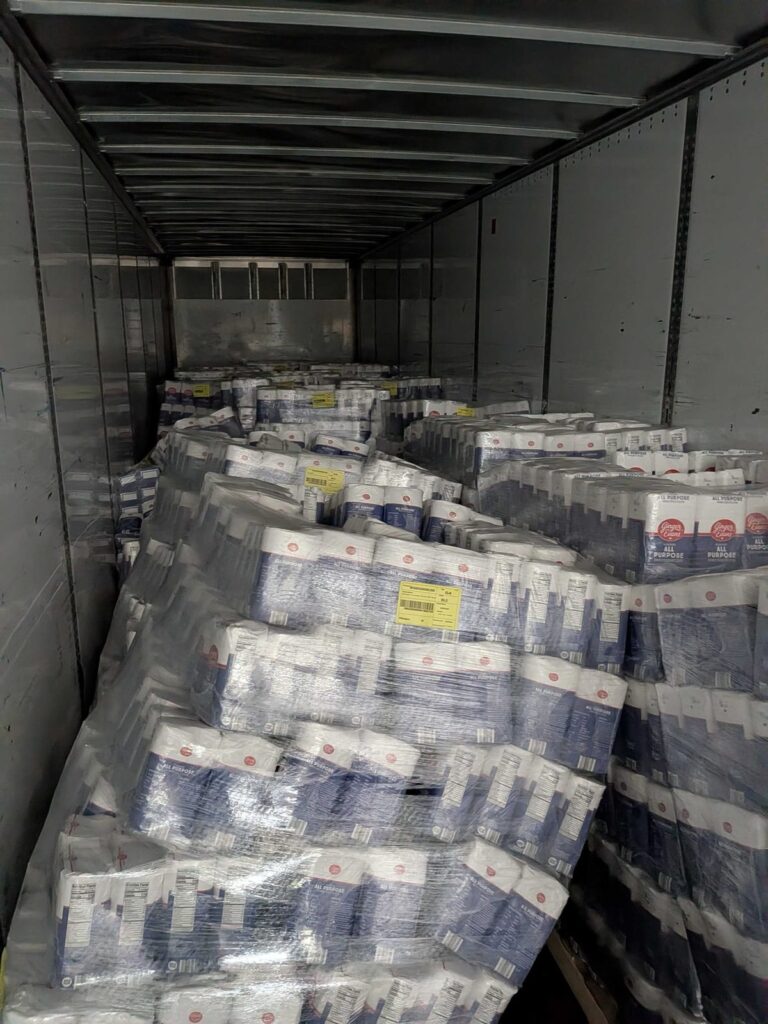
How the rebuild works once the truck is on the dock
The crew works inside the trailer. Shifted pallets cannot be moved safely, so nothing comes out to a staging lane first. The rebuild happens where the freight sits.
It goes like this:
- The receiver refuses the load and the truck leaves the dock.
- Somebody rings a restack warehouse, usually with photos of the damage attached so the crew can see the job before the truck arrives.
- The truck arrives and the warehouse looks at the load: how far the pallets spread, what tipped, what broke.
- If you ask, the warehouse can take its own photos and estimate how many pallets need rebuilding before anyone starts lifting.
- The crew rebuilds the full load back to the way it was packed, inside the trailer. Pallets that cracked get replaced, then fresh wrap and straps finish the job.
- The warehouse sends the invoice, and the driver stays put until it is paid in full, unless the client is a repeat client on normal terms.
The crew rebuilds the whole load, not just the pallets that look worst from the doors. A partial fix leaves the next dock with the same problem.
The trailer that arrived as a dry van leaves as a dry van, most times the very same trailer that brought the load in. A restack never turns one trailer type into another.
Check the map, then call before the truck moves
The Arizona map lists the warehouses in the state. Read the service tags on each listing, because they differ from one listing to the next. Some listings show restack work. Others do not. Listings change, so verify the services offered by each warehouse on the call before the truck moves.
The listing for AZ Warehouse Logistics in Surprise currently shows restack work in its tags, so it is the place to start on the map. Read the listing, then call to confirm the crew takes restack jobs and has dock space today. A tag on a listing is a starting point, not a booking. The call is what confirms the job.
Start here: Find a Warehouse in Arizona.
Every listed warehouse works by appointment, so check the listing for hours and call ahead. Do not roll a shifted load to a warehouse before you have called. The warehouse needs to know the truck is coming, what is in it, and when it will arrive, or there may be no crew and no dock free when it gets there.
If the first warehouse you call cannot take the load today, ask when the next opening is. Do not send the truck to a second warehouse without calling that one too.
What to tell the warehouse on the first call
Call now and talk through the load. Email can wait. A written message is the slow way to fix a load that needs a crew today, and the dock time gets set on the phone. Have this together before you dial:
- The truck’s spot right now, and the dock that refused the load
- Freight type and packing, trailer type and size, and the pallet count
- How many pallets shifted or broke, and photos if you have them
- What the freight is, in plain everyday terms
- Weight and dimensions of the items, or an itemized pack list.
- Rejection reason, visible damage, and where the load goes after the rebuild
- Who pays the invoice
The warehouse only asks for weight and dimensions, or an itemized pack list, when the freight is unusual or it has questions about the load. For a standard palletized load, the rest of the list is enough to set the dock time and size up the job.
Send whatever photos you have when you call. They let the warehouse size up the job before the truck gets there and turn a vague call into a booked dock time, though they do not take the place of the warehouse’s own look at the trailer.
Settle who pays before the crew starts. The driver stays until the invoice is paid in full, so the payer needs to be reachable while the crew works. A repeat client may be on normal terms instead, and the warehouse will say so on the call if that applies.
When the dock and crew are open, same-day work is often possible based on availability, and next-day is commonly doable. The warehouse sets the timing once it has the details, so the call is what starts the clock.
What sets the price
Nobody can price a restack off a card. The price tracks what the crew expects to meet when the doors open, and no one number survives contact with the real load.
| What the crew finds | How it moves the number |
|---|---|
| How far the load walked, and the pallet count | A trailer that shifted all the way across is a long job inside the box. A few leaning pallets are a short one. |
| Freight character | Bulky or heavy freight slows every lift the crew makes, while light pallets in one size go back up quickly. |
| Breakage | Cracked pallets, split cartons, and hurt product add sorting and rework, and the quote grows with that extra work. |
| Receiver extras | Wrap, strapping, or anything else the dock requires gets priced on the quote call, never assumed. |
| Timing and dock pressure | Pulling a crew off the day’s schedule costs more than booking the next open slot. |
When the doors open on damage worse than the photos, the price climbs. Count on that. That is why the warehouse looks at the load before it quotes a firm price, and why the photos you send matter.
Sort the exit before the crew lifts a pallet
Work out the ending before the crew starts. Most times the ending is plain: the driver pulls out in the trailer he came in with, hauling the fixed load, and nothing sits in storage between.
If the receiver cannot take the load back right away, ask about keeping the freight at the warehouse and sending it out again later. That is a separate agreement from the rebuild, on the warehouse’s terms, so settle it on the quote call rather than after the crew finishes.
A rebuilt load can head to several stops rather than returning to a single dock. Say so on the quote call and lay out the full picture: every destination, and pallets to each one. The warehouse can set up outbound trucks, or you can supply your own. Outbound pricing runs per truckload or per pallet, set by the load details and the warehouse’s rate structure.
Keep the payer reachable until the driver is released. The fastest way to lose an hour at the end of the job is a payer nobody can reach.
Start with the map and a phone call
Pick up the phone instead of waiting on email. Check the map, read the tags on each listing, confirm restack work and dock space on the call, settle who pays, and lock in a dock time. Start here: Find a Warehouse in Arizona.
Questions to settle before you call
Call a listed warehouse in the Phoenix West Valley and talk through the load. Read the tags on the listing first, then confirm restack work and dock space on the phone, and do not move the truck until the dock time is set.
Read the service tags on each listing on the Arizona map, then ask on the call if the crew takes restack jobs and has dock space today. Listings change and tags differ from one listing to the next, so verify the services offered by each warehouse before the truck moves. That tag check plus the phone call is all the checking there is.
Pick up the phone and walk the warehouse through the load. When the dock and crew are open, same-day work is often possible based on availability, and next-day is commonly doable. The warehouse sets the timing once it has the details, so contact the warehouse in advance and never show up unannounced.
The crew looks at the lean and the breakage, then rebuilds the full load inside the trailer back to the way it was packed. Pallets that cracked get replaced, and fresh wrap and straps finish the job. If you ask, the warehouse can take its own photos and estimate the pallets to rebuild before anyone starts. The driver pulls out once the invoice is paid in full, except when the client is a repeat client on normal terms.
Where the truck sits, where the refusal happened, freight type and packing, trailer type and size, pallet count, how many pallets shifted or broke, photos if you have them, the rejection reason, where the load goes after the rebuild, and who pays the invoice. Weight and dimensions of the items, or an itemized pack list. The warehouse will only ask for that if the freight is unusual or it has questions.
There is no set rate. The price follows how far the load shifted, the pallet count, the freight character, the breakage, anything extra the receiver requires, and how soon the crew has to pull off other work. If the crew finds worse damage than the photos showed, the number goes up, so the warehouse looks at the load before it quotes a firm price.
Most times the driver pulls out in the same trailer, with nothing stored in between. Keeping the freight at the warehouse for later delivery is a separate agreement, on the warehouse’s terms. A split to several stops works when it comes up during quoting, with every destination and pallets per stop laid out up front, and outbound pricing runs per truckload or per pallet depending on the load and the warehouse’s rate structure.