
Your box is coming up the Houston Ship Channel, and the place it is supposed to go has no crew, no forklift, and no floor space to take it apart. A box that nobody can open at the receiver has to be opened somewhere else, and every day it waits brings the terminal charges closer.
Devanning is the work of taking cargo out of an ocean box and setting it onto pallets or a warehouse floor, ready to store or send on. In 2025 Port Houston posted its best container year yet at 4,303,345 TEUs, 4 percent above 2024, which is why Houston warehouses strip boxes every working day for shippers whose receivers cannot take the load. This page points you to the map instead of picking one warehouse for you, and it covers the Houston clock, where the freight goes next, what the crew faces, and what to put in a quote request.
In Houston, the clock is set at the terminal
Boxes land at Barbours Cut or Bayport, the two container terminals on the 52-mile Houston Ship Channel. That channel serves eight public terminals and over 200 private ones, and carries more waterborne tonnage than any other port in the country. Bayport added Wharf 7 late in 2025, a thousand feet of new berth good for more than 500,000 TEUs a year, so Gulf volume keeps growing through the same two container gates.
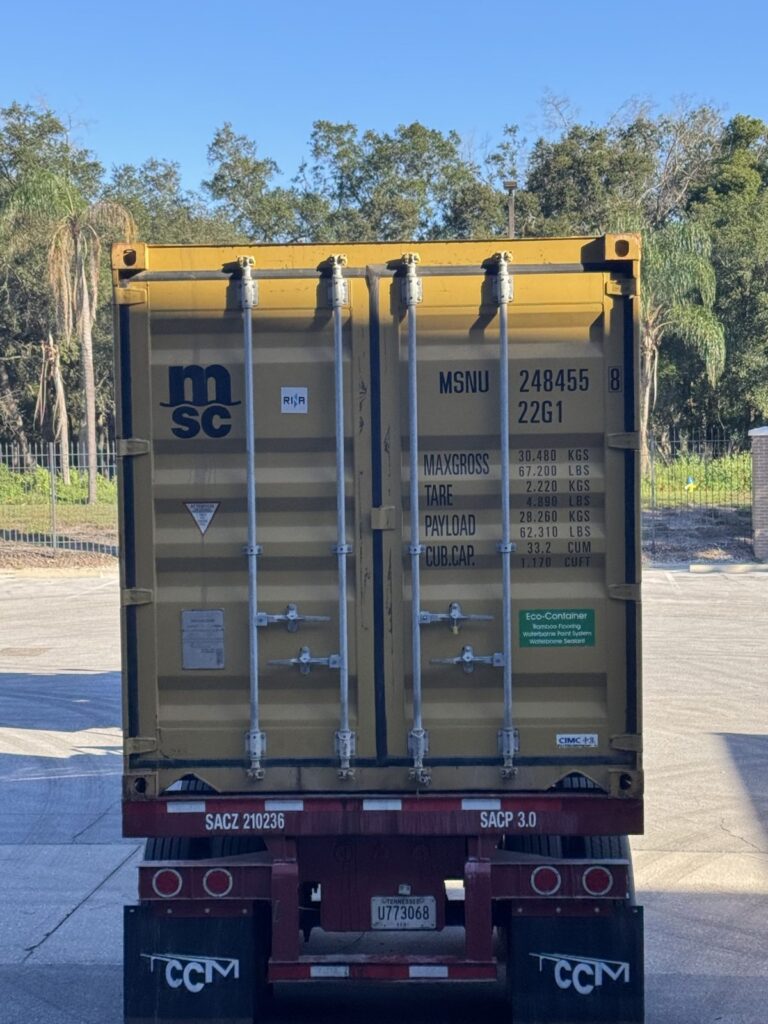
Your Last Free Day is the final day the box can sit at the terminal or rail yard before the terminal starts charging demurrage. Houston gets no day count on this page, because free time shifts with the carrier, the terminal, and the box type, and Houston terms are not another port’s terms. Get the Last Free Day in writing from your carrier or terminal, then hand that date to the warehouse with your first message, before anything is booked.
Demurrage covers a loaded box left inside the terminal past that date. Detention is the separate charge for holding an empty box outside the terminal past the carrier’s free window. A single shipment can pick up both charges at once. No dollar amounts appear here, because those charges move with the carrier, the terminal, the box type, and the contract, and a national guide number would not tell you what your box will cost.
One Houston box, three places the freight can go next
Most boxes end in one of three ways: the freight gets palletized and held near the port, it gets divided for separate Texas deliveries, or it gets reloaded for the road. Decide which ending you need before you ask for a quote, because the warehouse staffs and prices the job around it.
Held freight sits in short-term storage until a receiver or a truck is ready. Hold terms are set by the warehouse, so ask what they are before the box arrives rather than assuming the freight can sit as long as you need.
A Houston split often sends part of the load north on I-45 toward Dallas-Fort Worth and the rest along I-10, the east-west Gulf corridor, or on to other Texas stops. When you ask about a split, lay out every stop and how many pallets go to each one, because the warehouse plans trucks and labor off that list. Every warehouse on the Texas map handles splits. For a split, expect the extra outbound priced by the truckload or by the pallet, depending on the load and that warehouse’s rate structure.
Transloading is simply the unload plus the reload: box freight goes out on dry vans, flatbeds, rail cars, or LTL carriers. How the unload connects to the rest of the Texas picture is covered on Transloading in Texas, alongside restack services in Texas and cross docking in Texas. The trailer math needs a warning. Three 40-foot boxes into two 53-foot trailers only works when the freight is light and already on pallets. A loose 40-footer built onto pallets can fill two dry vans by itself, and heavy palletized freight hits the weight limit before the trailer is full. Do not book outbound trucks off the ratio; send the pallet count and the weight and let the warehouse work out the trailers.
Some Houston warehouses line up the outbound trucks themselves, and some expect your forwarder or carrier to bring the box in and take the freight out. Settle that question before the box moves, not after it is empty.
Use the Texas warehouse map to find warehouses around the port, and speak to the warehouse directly before anything ships.
What the crew finds when the doors open
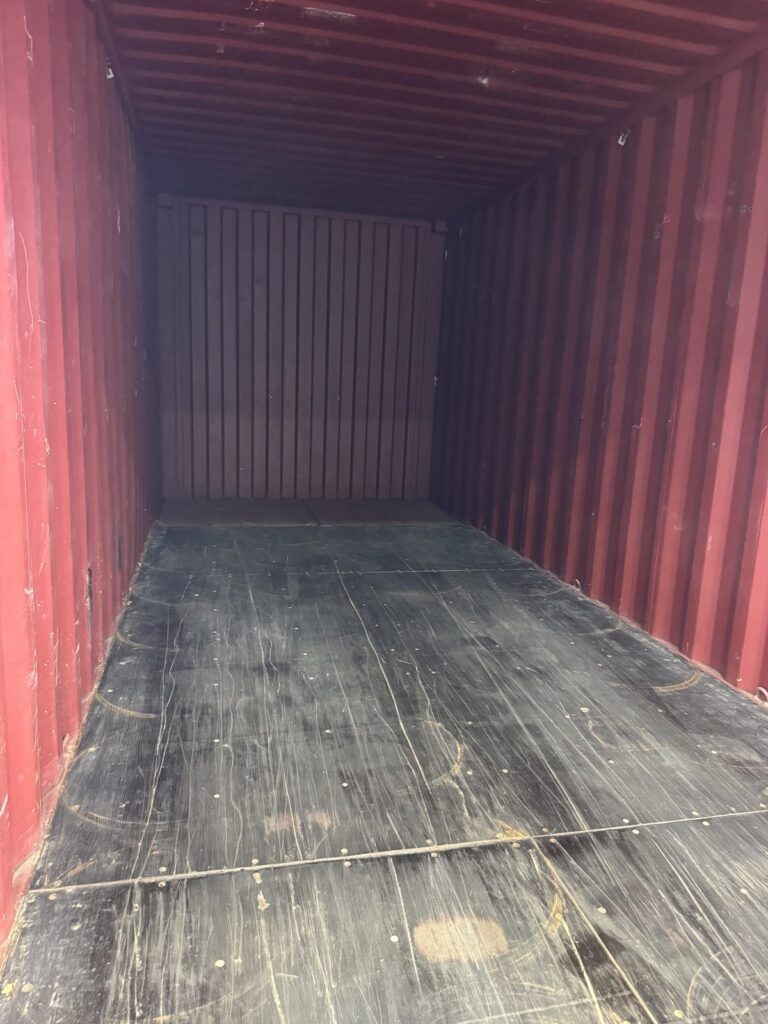
A floor-loaded box has its cartons stacked straight on the floor, with no pallets under them, so the crew carries the freight out carton by carton. As an industry guide, not a warehouse promise, a floor-loaded 40-footer takes 3 to 5 hours of hand work to empty.
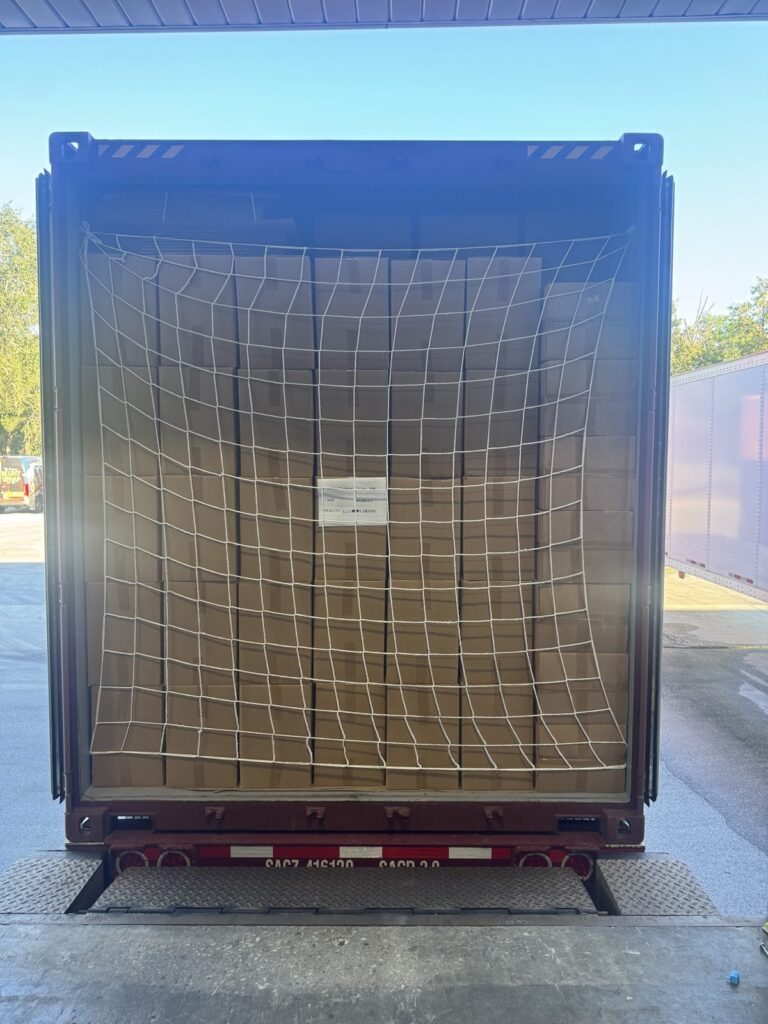
A palletized box is a forklift job: loaded pallets roll straight out, and the same industry guide puts the empty time at 30 to 60 minutes. The crew still counts cartons and checks condition as the freight comes off, whatever the load type.
Once the freight is on pallets, a 40-footer runs to about 20 pallet positions and a 20-footer to about 10, again as an industry guide, with pallets kept apart and marked by destination. Heavy or oversized freight is a separate question: ask the warehouse whether it can take your load, because no weight or size limit is printed here. Put the load type in the first line of your message, because it decides the crew size, the hours, and the quote.
Send one message the warehouse can quote from
A warehouse answers fast when the first message already holds the whole job:
- Box size and type, plus whether the load is floor-loaded or palletized, because that sets labor and hours.
- What is inside, the carton or pallet count, and whether anything is heavy or oversized.
- Weight and dimensions of the items, or an itemized pack list.
- Where the freight goes next: hold near the port, split to Texas stops, cross-dock, or reload to outbound trucks.
- When the box arrives, plus your Last Free Day in writing.
Appointment rules, live unload against drop trailer, and the empty box return all run warehouse by warehouse, so settle them while you book. A same-day unload sometimes opens up when a crew has room, and next-day is usually workable, but a dock that is not expecting your truck is not a plan. Book ahead and do not send a truck to a dock that has not agreed a time.
Why two boxes that look alike get different quotes
No Houston rate is printed here, and a number borrowed from another market would mislead more than it helps. What moves the quote is the pallet count, how the freight was loaded, how heavy it is, how fast you need it turned, how long it sits in storage, and what the outbound handling takes. Those are the warehouse’s costs of doing the work, not a price list handed to the shipper.
A box that takes a crew half a day of hand work is priced as a different job from a box a forklift clears inside the hour, and a load that needs storage plus split outbound moves takes more handling than a straight cross-dock. Send the request straight to the warehouse you pick, with the full scope in that first message, and expect an answer as soon as possible, normally within 24 hours.
Find the Houston warehouse before the truck rolls
Use the Texas warehouse map to find warehouses near Barbours Cut and Bayport, then confirm the one you pick can take your exact load, floor-loaded or palletized, heavy or oversized, before the box ships. Freight for Dallas runs north on I-45, and I-10 runs the east-west Gulf route out of Houston. Dallas-Fort Worth and Laredo are separate Texas markets. For the statewide picture, see Transloading in Texas.
Find a Texas warehouse on the map.
Frequently asked questions
Start on the Texas warehouse map and look for warehouses around Barbours Cut and Bayport, then ask the warehouse directly whether it can take your box.
Warehouses around Houston that offer transloading take both. A floor-loaded box comes out carton by carton and takes longer, while a palletized box comes off by forklift, so put the load type in your first message.
It gets palletized, kept apart and marked by destination, then cross-docked to outbound transport or held in short-term storage. Ask who lines up the outbound trucks, the warehouse or you, before the box arrives.
Notice runs warehouse by warehouse, so reach out the moment you know when the box arrives and what your Last Free Day is. A same-day slot sometimes opens when a crew has room, and next-day is usually workable, but book ahead and do not send a truck to a dock that has not agreed a time.
Yes. Pallets from one box can be kept apart and marked for separate outbound moves. Every warehouse on the Texas map handles splits, but lay out the full scope, every stop and the pallets for each stop, when you first contact the warehouse. For a split, expect the extra outbound priced by the truckload or by the pallet, depending on the load and how that warehouse prices the work.
Find a warehouse on the Texas map and send the request straight to that warehouse. Include the box size and type, whether the load is floor-loaded or palletized, and what the freight is. Weight and dimensions of the items, or an itemized pack list. Add where the freight goes next, when the box arrives and your Last Free Day, and the full split scope if the load divides. The warehouse answers directly, usually inside a day, so a complete first message gets a complete answer.