
When a Massachusetts receiver says no
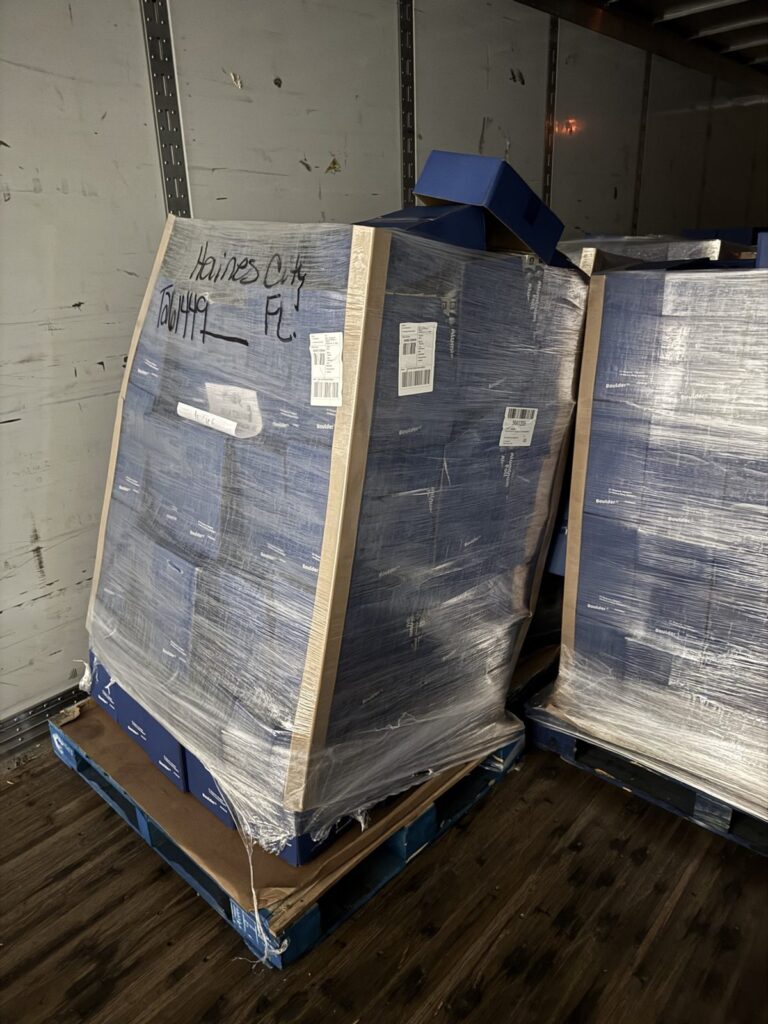
The call comes from a cab or a dock outside Boston, and the day is already sideways. The receiver took one look at the load and refused it, or the driver felt the pallets shift on the Mass Pike. Either way, he’s got a trailer he can’t deliver and can’t fix on his own.
Massachusetts runs its container freight through one gateway: Conley Terminal in South Boston, New England’s only full-service container terminal. The receivers on the other end of those drays are grocery and retail distribution centers, and those docks turn away leaning loads fast. A refused load here is not a freak event. It is the cost of moving freight through strict docks.
This page tells you how the rebuild works, what to have ready on the call, and how payment runs before the driver moves again.
Where restack work happens in Massachusetts
Restack work in Massachusetts happens at warehouses that take distressed loads, and the map is where you find them. The warehouse currently listed for Massachusetts restack work is RKA Transportation Services Inc in South Easton, with restacking on its listing. Listings change, so check the map before the truck moves and call to confirm the crew takes restack work and has dock space today. A tag on a listing still needs a phone confirmation before the truck moves. Don’t send a shifted load to a warehouse without calling first.
For the wider picture of moving freight through Massachusetts warehouses, see our Transloading in Massachusetts guide.
Inside your trailer: how the rebuild actually goes
The crew rebuilds the load inside your trailer because shifted pallets are not safe to move. Know that before anything else.
Every job follows the same order. The receiver sends the truck away. Someone finds the restack warehouse, usually with photos of the shifted load attached so the warehouse sees the job before the truck moves.
When the truck arrives, the warehouse walks the trailer and assesses the lean, the spread, and the breakage. If you ask, they will photograph the load and estimate the rebuild pallet count before the crew begins.
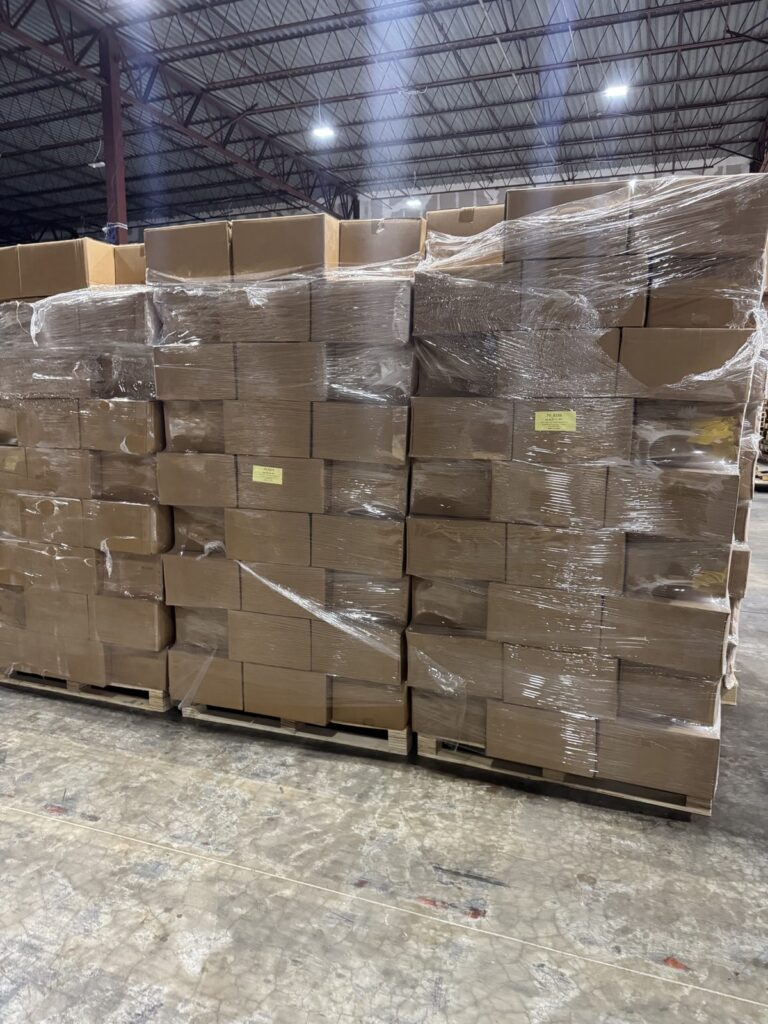
The full load gets rebuilt the way it was packed before it shifted. Broken pallets are replaced. Wrap and straps are reapplied. Banding is not included in a standard rebuild. Price it on the quote call if the receiver wants it.
After the rebuild, the warehouse invoices the job, and the driver is not released until that invoice is paid in full. Repeat clients may be on normal payment terms.
The first call, done right
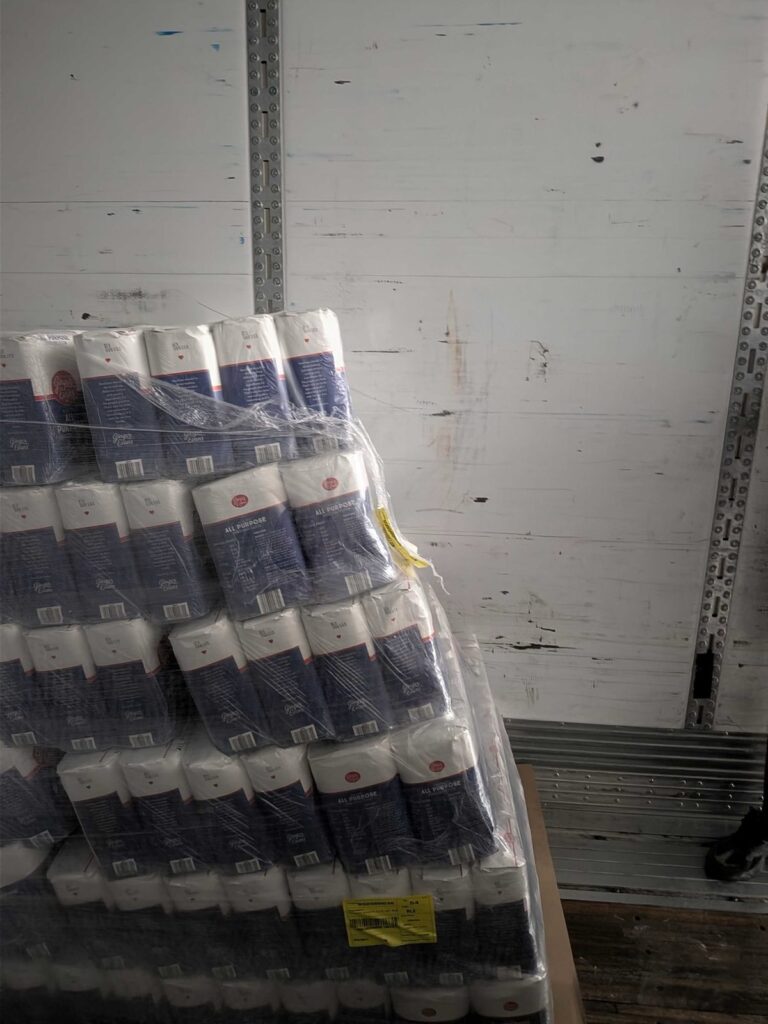
Make the call now and describe the load: where the truck sits, where the refusal happened, what moved. That conversation becomes the dock time and the number. Get this together before you dial:
- Where the truck sits now, and where the load was refused
- Freight type, packing, trailer type and size, pallet count
- How many pallets look shifted or damaged, photos if you have them
- General commodity details, in plain terms: what the freight is
- Weight and dimensions of the items, or an itemized pack list. The warehouse will only ask for this if the freight is unusual or they have questions.
- Rejection reason, visible damage, destination after the rebuild
- Who pays the invoice
Send the photos you have with the call. They let the warehouse scope the job before the truck arrives. Photos do not replace the warehouse’s own inspection, but they turn a vague call into a scheduled time.
Email can wait. Don’t wait on a written reply for this kind of job. It all starts with a phone call.
What the number follows
No one can price this work off a card, and no single figure would survive contact with the load. The quote tracks what the crew expects to find when the trailer doors open.
| What the crew finds | What it does to the quote |
|---|---|
| Shift distance and pallet count | A full trailer that walked sideways is a long day inside the box. A few leaning pallets are not. |
| Freight character | Heavy, bulky, or awkward product fights every lift. Uniform light pallets go back up fast. |
| Breakage | Cracked pallets, burst cartons, and damaged goods mean rework or product set aside, and the quote follows. |
| Receiver add-ons | Banding and anything else the receiver insists on are priced during quoting, never assumed. |
| Crew timing | A crew diverted from today’s schedule prices differently than one booked into the next open slot. |
If the crew opens the trailer and finds more damage than the photos showed, the number moves. Count on it. That is why the warehouse looks before it quotes.
Decide the exit before the rebuild starts
Settle the ending before the crew begins. The standard result: the driver departs in the same trailer he brought in, hauling corrected freight, with nothing stored along the way.
If the receiver cannot accept the load back immediately, ask about holding the freight and redelivering later. Hold terms are set by the warehouse, and a hold is its own agreement apart from the rebuild.
The rebuilt load can also go out to several destinations rather than back to one dock. Ask about split delivery on the quote call so the price matches the real scope, and hand over the full picture: all destinations, pallets to each. The warehouse can set up outbound trucks, or you can bring your own. Outbound pricing is per truckload or per pallet, set by the load and the warehouse’s rate structure.
A shifted dry van goes back out as a dry van, usually the same one it shifted inside of. Restack work doesn’t involve trailer conversions.
Find a restack warehouse on the Massachusetts map
Call instead of emailing and waiting. The map shows the warehouse listed for Massachusetts restack work. Ring them, confirm restack on the call, settle who pays, and lock in a dock time. The driver leaves only after the invoice is paid in full, so keep the payer reachable while the crew works. Start here: Find a Warehouse in Massachusetts.
Questions to settle before you call
My load was refused in Massachusetts. Who restacks the pallets?
Check the Massachusetts map for the warehouse listed for restack work, and confirm it takes restack jobs before the driver heads over. Read the listing, then confirm it on the phone. Start with a phone call, not an email.
How do I confirm the warehouse actually does restack work?
Restacking is on the listed warehouse’s listing, along with pallet rework. Read the listing, then ask on the call whether the crew takes restack jobs and has dock space today. A listing tag plus a phone confirmation is the whole check.
How fast can the warehouse take a refused load?
Call and walk through the load. When the dock and crew are open, same-day often works; next-day is usually doable. The warehouse confirms the timing once it has the details.
What does the crew do once the truck arrives?
The warehouse walks the trailer, assesses the lean and the breakage, and rebuilds the full load inside the trailer the way it was packed before it shifted. Broken pallets are replaced, wrap and straps are reapplied. The driver is released after the invoice is paid in full, unless the client is a repeat client on normal terms.
What do I need ready on the first call?
Truck location, refusal point, freight type and packing, trailer type and size, pallet count, shifted and damaged count with photos, and who pays the invoice. Weight and dimensions of the items, or an itemized pack list. They’ll only ask for it if the freight is unusual or they have questions.
After the rebuild, can the freight be held or sent to several stops?
Standard result is the driver leaves in the same trailer with nothing stored in between. A hold with redelivery is a separate agreement on warehouse terms. A split to several destinations works when raised during quoting, with every destination and pallets per destination laid out up front.
Check the Massachusetts map for the warehouse listed for restack work, and confirm it takes restack jobs before the driver heads over. Read the listing, then confirm it on the phone. Start with a phone call, not an email.
Restacking is on the listed warehouse’s listing, along with pallet rework. Read the listing, then ask on the call whether the crew takes restack jobs and has dock space today. A listing tag plus a phone confirmation is the whole check.
Call and walk through the load. When the dock and crew are open, same-day often works; next-day is usually doable. The warehouse confirms the timing once it has the details.
The warehouse walks the trailer, assesses the lean and the breakage, and rebuilds the full load inside the trailer the way it was packed before it shifted. Broken pallets are replaced, wrap and straps are reapplied. The driver is released after the invoice is paid in full, unless the client is a repeat client on normal terms.
Truck location, refusal point, freight type and packing, trailer type and size, pallet count, shifted and damaged count with photos, and who pays the invoice. Weight and dimensions of the items, or an itemized pack list. They’ll only ask for it if the freight is unusual or they have questions.
Standard result is the driver leaves in the same trailer with nothing stored in between. A hold with redelivery is a separate agreement on warehouse terms. A split to several destinations works when raised during quoting, with every destination and pallets per destination laid out up front.