Your container is off the ship at Port Newark-Elizabeth (the Port of New York and New Jersey’s container terminals in Newark and Elizabeth), or your trailer is rolling up the Turnpike, and the freight needs to keep moving. The receiver cannot take it yet, or the delivery window is tight, and every day it sits in the wrong place runs up detention. Cross-docking is how it keeps moving. Freight comes off the inbound container or trailer and goes straight onto outbound trailers, usually the same day, with no storage stay in between. The Port of New York and New Jersey handled 8.9 million TEUs in 2025, and the warehouses around it turn import freight into domestic outbound loads every day. It works best when the outbound trucks are booked before the inbound arrives.
Two cross-dock corridors, not one
New Jersey’s cross-dock warehouses sit in two groups, and picking the right side of the state matters more than picking the right warehouse.
On the Port Newark-Elizabeth side: Secaucus, minutes from the port on I-95 and Route 3; Dayton, in central Jersey near Turnpike Exit 8A; Branchburg, on the I-78 and I-287 corridor to the west.
On the Philadelphia side: Camden, across the Delaware from Philadelphia; Cinnaminson, in Burlington County; Swedesboro, in Gloucester County on the I-295 corridor. These warehouses work the Philly metro and South Jersey, and I-295 runs right through them.
None of the listed warehouses sits inside the port terminals themselves, and every one runs on appointments. Match the warehouse to the gateway your freight actually lands at. Sending Philadelphia freight to Branchburg, or port freight to Swedesboro, burns a long dray for nothing.
The South Jersey warehouses also have their own gateway. The Packer Avenue Marine Terminal in Philadelphia is that port’s premier container handling facility on the Delaware River, with immediate access to I-95 and I-76, and ocean container to domestic truck work is part of what it does. Freight landing there does not need to travel to North Jersey to cross-dock. When you contact a warehouse, confirm which gateway drays it takes. That one question decides whether your move is a short dray or an expensive one.
Live unload or drop trailer: decide before the driver arrives
This is the detail that makes or breaks the day, and it is decided when you book the appointment, not at the gate.
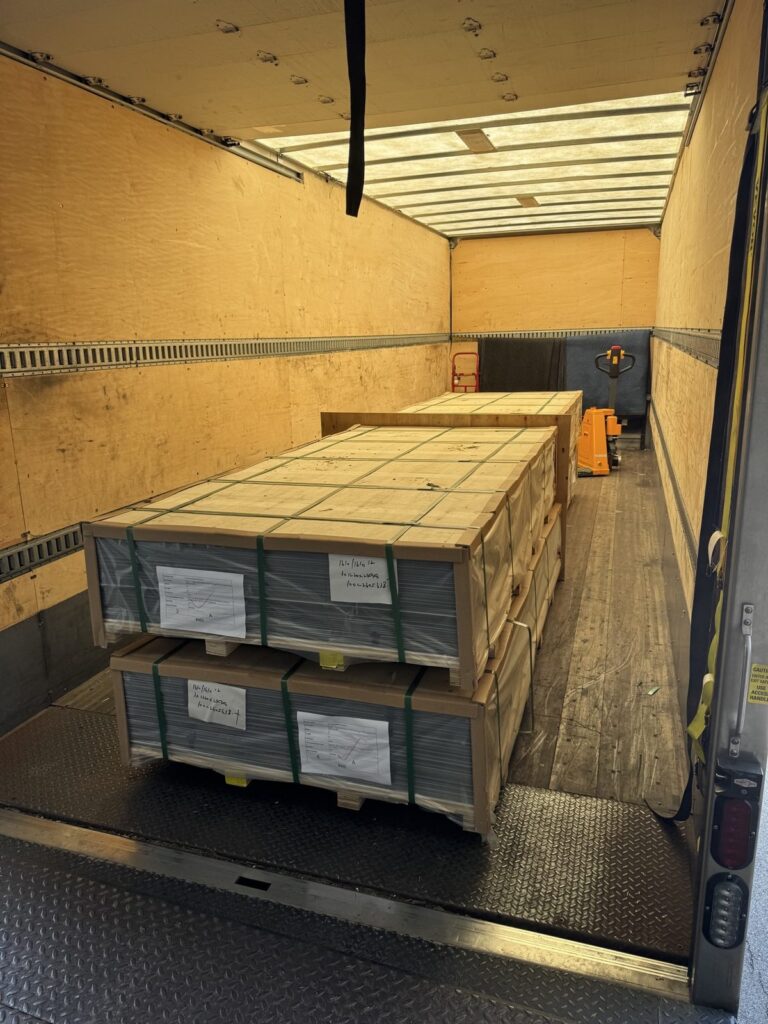
In a live unload, the trailer stays on the tractor and your driver waits while the warehouse unloads it. That needs an open dock door and a crew ready the moment the truck arrives.
In a drop, the driver swaps the trailer in the yard and leaves, and the warehouse unloads on its own schedule. Drops need yard space instead, and drop trailer programs are well established around the port complex.
Which one you get depends on the warehouse’s yard and dock setup. Ask when you book. A driver who shows up expecting to drop at a warehouse that only does live unloads is a driver sitting in a parking lot.
How a cross-dock move runs, step by step
- Book the appointment. Confirm the arrival window and whether the warehouse takes a live unload or a drop.
- The inbound arrives: a container dray from the port or an inbound trailer off the highway. It goes to the dock.
- The freight comes off and gets sorted by destination. Pallet counts are verified against the pack list.
- Outbound trailers load by destination, including split deliveries across several trucks.
- The paperwork closes and the freight is on the road, usually the same day or the next.
Same-day turns are often possible based on availability. Next-day is commonly doable. Contact the warehouse in advance either way. Never show up unannounced.
What drives the cost of a cross-dock turn
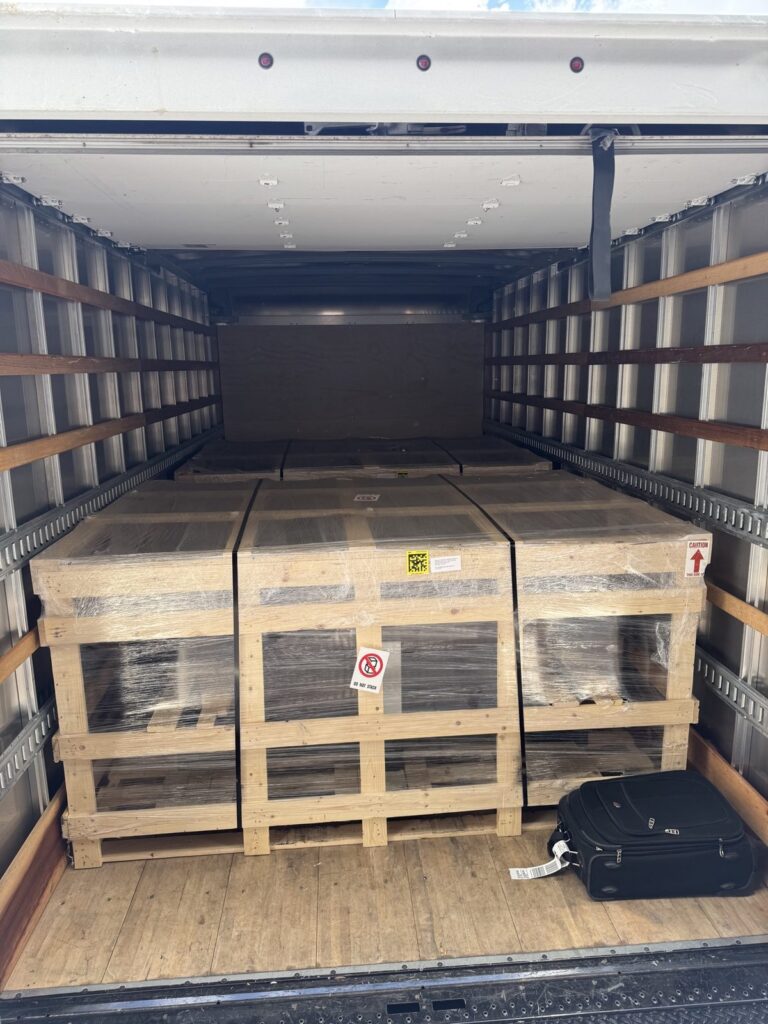
Palletized freight on standard 48 by 40 pallets is the simplest thing a warehouse can turn. Floor-loaded or irregular loads get quoted after a look, because the warehouse has to build the pallets before it can move them.
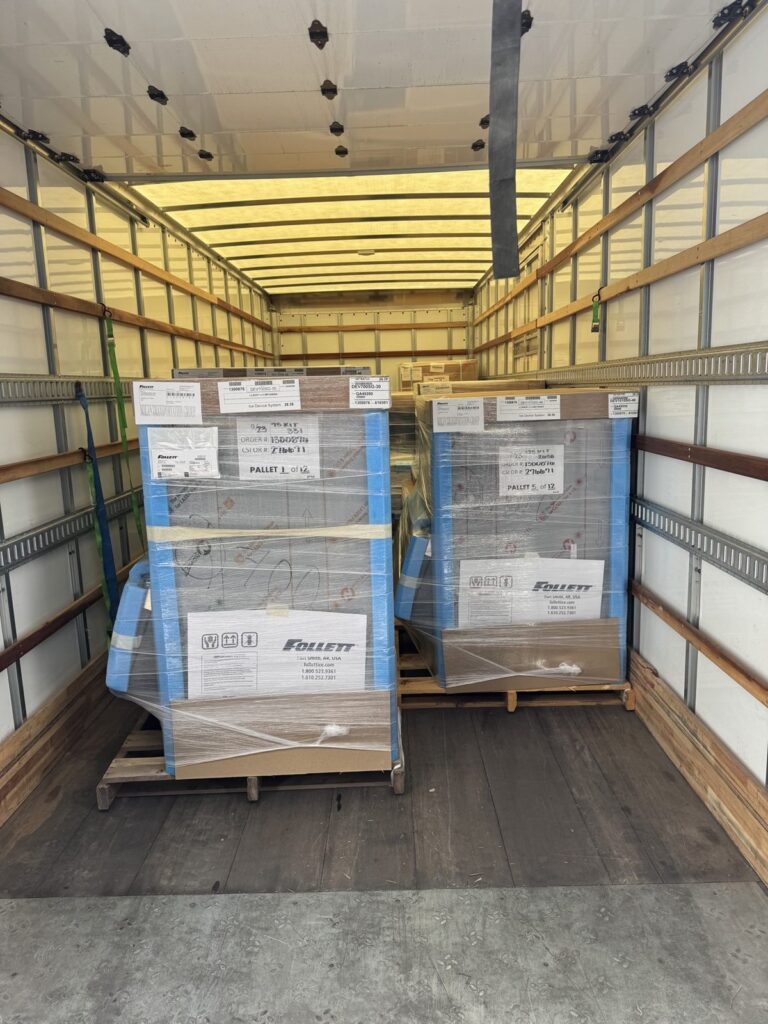
Split deliveries add outbound trucks, priced per truckload or per pallet depending on the load. A lightweight palletized 40 can sometimes reload into two 53-foot trailers, but do not count on that ratio. Heavy freight hits the weight limit long before the trailer is full.
Every figure above describes the warehouse’s cost to do the work, not a rate card. Get the number from the warehouse when you send the details below.
What to send so the warehouse can quote it
A warehouse can give you a real answer only when it sees the whole move. Send all of this in one message:
Weight and dimensions of the items, or an itemized pack list.
Plus the inbound details: container or trailer, palletized or floor-loaded, and which gateway the freight lands at. The outbound plan: every destination, how many pallets go to each, and your dates. And whether you need a live unload or a drop. Leave any of that out and the reply will be a question, not a quote.
Cross-docking in New Jersey: questions we hear
Usually the same day when the outbound trucks are booked before the inbound arrives. If the outbound is not lined up yet, the freight can sit a day or two, but that is short-term storage, not cross-dock, and it prices differently. Tell the warehouse the real timeline up front.
Book the appointment before the driver rolls. Every listed warehouse runs on appointments, and a truck that shows up unannounced may be turned away or left waiting. Send the arrival window and the outbound plan when you book.
In a live unload the trailer stays on the tractor and the driver waits while the warehouse unloads. In a drop, the driver swaps the trailer in the yard and leaves, and the warehouse works it on its own time. The warehouse you book decides which it can do, so settle it before the truck rolls, not at the gate.
Yes. The warehouse sorts the freight and reloads it across however many outbound trailers you need, and whatever does not fill a truck ships as partials. You must explain the full scope up front: every destination and how many pallets go to each.
Weight and dimensions of the items, or an itemized pack list. Plus the inbound details (container or trailer, palletized or floor-loaded, which gateway), the outbound destinations with pallet counts, and your dates. A warehouse can give you a real answer only when it sees all of that.
The southern listings can. Warehouses around Camden, Cinnaminson, and Swedesboro sit on the Philadelphia side of the river and take drays from the Packer Avenue Marine Terminal as well as longer drays from Newark-Elizabeth. Match the warehouse to the gateway your freight actually lands at.
Get a cross-dock quote in New Jersey
Request quotes on the Find a Warehouse in New Jersey map page. Pick the warehouses on the side of the state your freight lands on, send the full details above, and your request goes straight to them. They reply as soon as they can, normally within 24 hours.