
Texas gives a shipper two different parking problems, and they call for two different holds. One starts at the Gulf, when a container lands at Houston and the receiver is not ready for it. The other starts at the border, when a truckload has already crossed at Laredo and still cannot move on. Short-term space in Texas is the answer to both: pallet storage you rent for the wait itself, for days or weeks or a few months, with the warehouse crew and equipment included, instead of a multi-year lease on an empty building.
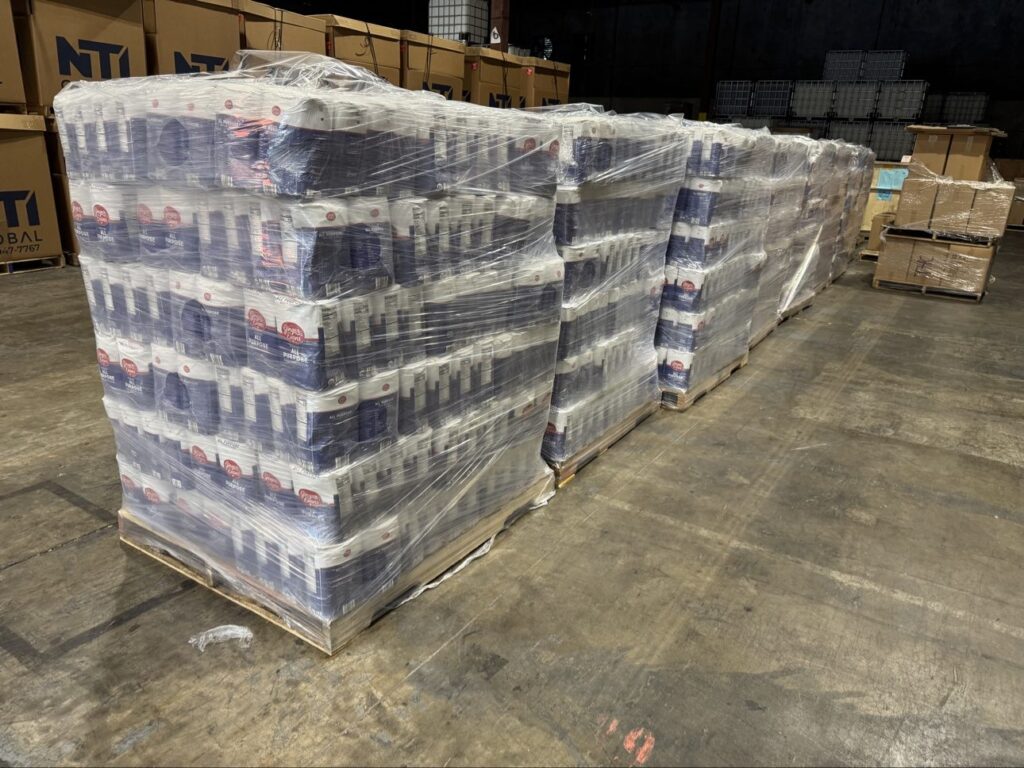
When a Texas hold is a Gulf problem, and when it is a border problem
A Gulf hold usually starts with a receiver who cannot take the load yet, a primary 3PL that is full, or a seasonal surge that filled your own floor. Port Houston set a record in 2025 at 4,303,345 TEUs, up 4 percent on 2024, and moved 54,491,066 short tons, up 3 percent. With that much freight coming through one Gulf gateway, a landed box that has to wait for its final destination is routine, not a freak event.
A border hold starts differently. Freight that crossed at Laredo may be waiting on release, or waiting because the receiver farther north is not ready. Laredo’s World Trade Bridge and Colombia-Solidarity Bridge handle 14,000 to 18,000 commercial trucks a day, and Laredo ranks as the busiest inland port in the US. In April, Laredo accounted for about 39 percent of US-Mexico trade by value. When a crossing that busy backs up, even by a little, truckloads need a place in Texas to sit until they can roll again.
Either way, the freight is already in Texas and the truck still has to go somewhere. That is the job a short hold does: give it a roof, or a gated yard, and a way out.
Houston, Dallas-Fort Worth, or Laredo: choose where the freight waits
Pick the hold location before you pick a warehouse, because the dray and the final leg both follow from it.
A Houston hold keeps freight close to the Gulf gateway. The Houston Ship Channel itself runs 52 miles. It serves 8 public terminals and more than 200 private ones, and it leads the nation for waterborne tonnage. Its container terminals are Barbours Cut and Bayport. Bayport gained Wharf 7 late in 2025. That addition brought 1,000 feet of berth and capacity above 500,000 TEU. Close in this market means a dray that makes sense, not a dock door inside the terminal fence. Most overflow buildings sit a workable truck ride from the terminals, not on port property.
A Dallas-Fort Worth hold suits freight whose final stop is in north Texas. I-45 runs Houston to Dallas, so a box that lands at Houston can be staged inland and finish with a shorter last leg. I-10 carries the east-west Gulf corridor out of Houston. A hold farther inland can also cost less than one hard against a gateway, though the dray to get there is part of that math, so ask the warehouse to price the whole move, not just the pallet time.
A Laredo hold suits freight that came over the border and is not ready to go north yet. It sits as palletized stock until release comes through or the receiver can take it, then moves up I-35, which runs Laredo to San Antonio and Dallas-Fort Worth. Holding at the border end of that corridor avoids hauling a load north, only to haul part of it back south if plans change.
Pallets under a roof and boxes in a gated yard are two different answers, so settle which one you need first. A gated yard stages empty containers, drop trailers, and chassis for later use. Palletized freight, by contrast, belongs indoors, covered and forklift-ready. Asking for the wrong one wastes the first call.
No single warehouse is singled out on this page. Use the map to compare the listed options by location and by what they take.
The charges that keep running while a box sits
Once free time runs out at the marine terminal, the terminal starts charging for a loaded import box that has not left yet. That charge is demurrage. Once the box is outside the terminal, a different clock starts: detention and per diem cover the equipment time out on the road and in the yard. The two clocks are billed by different parties, so a quote that mixes them together will mislead you.
As national guides only, never as a Texas standard, demurrage free time runs about 4 days, demurrage runs about $200 to $400 per day, and per diem runs about $75 to $200 per day. Carrier, terminal, container type, and contract all move those figures, so treat any single table as a rough guide, not a Texas promise.
Parking the load in a warehouse stops that terminal meter and replaces it with a pallet hold you can plan around. That swap is the whole financial case for a short hold: the warehouse clock is predictable, the terminal clock is not.
What happens to the load during the hold
First the warehouse takes the container or truckload in. Where the warehouse offers it, floor-loaded freight gets unloaded and built into pallets before it is stored, which turns a hand-stacked box into stock a forklift can move. As a guide only, not warehouse data, hand-unloading a floor-loaded 40-foot box usually runs 3 to 5 hours. A palletized box, moved by forklift, usually runs 30 to 60 minutes. As another guide, expect roughly 20 pallet positions from a 40-foot box, and roughly 10 from a 20-foot one.
Then the freight waits as palletized stock for the short period you agreed, not under a lease. The wait ends once the receiver is ready or the outbound plan firms up.
Splitting is where a Texas hold earns its keep a second time. Take a Houston container bound for two places: some pallets go to a Dallas-Fort Worth receiver, and the rest go to a border-area destination. Every warehouse listed here will split a load that way. Sorting can be done by SKU, by order, or by destination, before any outbound truck is booked. Tell the warehouse the whole picture up front: every destination, and the pallet count headed to each one. The warehouse may book the outbound trucks for you, or you can book your own, and that choice stays yours either way. Whether outbound is priced by the truck or by the pallet depends on the load itself and on that warehouse’s own rate sheet.
Outbound math needs the same care when ocean boxes convert to 53-foot domestic trailers. Three 40-foot containers into two 53-foot trailers works only for lightweight palletized freight. One loose-loaded 40-foot box, once it is built to pallets, can fill two dry vans by itself. Heavy palletized freight hits the weight limit on a dry van before it fills the cube. Never treat the ratio as a safe assumption. Run the outbound math past the warehouse for your actual load.
Sometimes a load never really settles in. It crosses the dock and leaves inside a day, which is common practice for cross-docking, not a guarantee for your load. A short-term warehouse can also hold freight and then send it on to a primary 3PL when space opens there, or straight to customers. For port freight more broadly in Texas, see transloading in Texas.
How intake is booked changes from one warehouse to the next. Some run live unloads, some take drop trailers, and lead times and arrival windows are set house by house. Nail down the exact procedure for the warehouse you pick before you dispatch anything. What a warehouse accepts also changes house by house, so ask each warehouse directly before you send the load. Some partners may handle hazmat, reefer, or food-grade freight, and some may not.
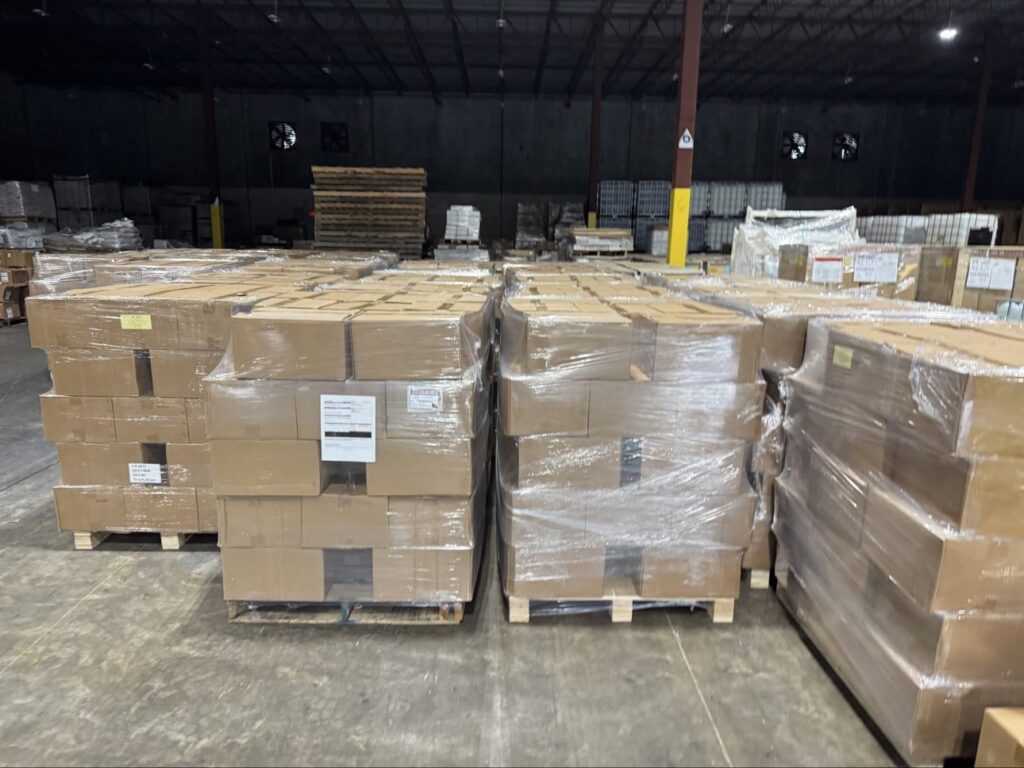
Why two identical loads can get two different invoices
Nobody prints one Texas rate for a short hold, because the invoice has separate parts. Storage is one part. Handling is the rest: receiving the load, moving pallets in and out, and unloading a container where that work is needed. Those are the warehouse’s cost components, and the warehouse’s quote for your load is the only figure worth budgeting from.
Four things push that quote up or down. The pallet count sets the base. The length of the wait adds time to it. A floor-loaded container that needs unloading and palletizing adds labor. Extra outbound touches, like splitting or rebuilding pallets, add handling. More of any of those means a bigger invoice, and less means a smaller one.
Where the freight waits pushes it too. The same inventory generally costs more hard against a major port or border gateway than it does farther inland. A quote from one warehouse is not a market rate, and a Texas quote is not a national rate. Send the details in the checklist below and let the warehouse price your actual load.
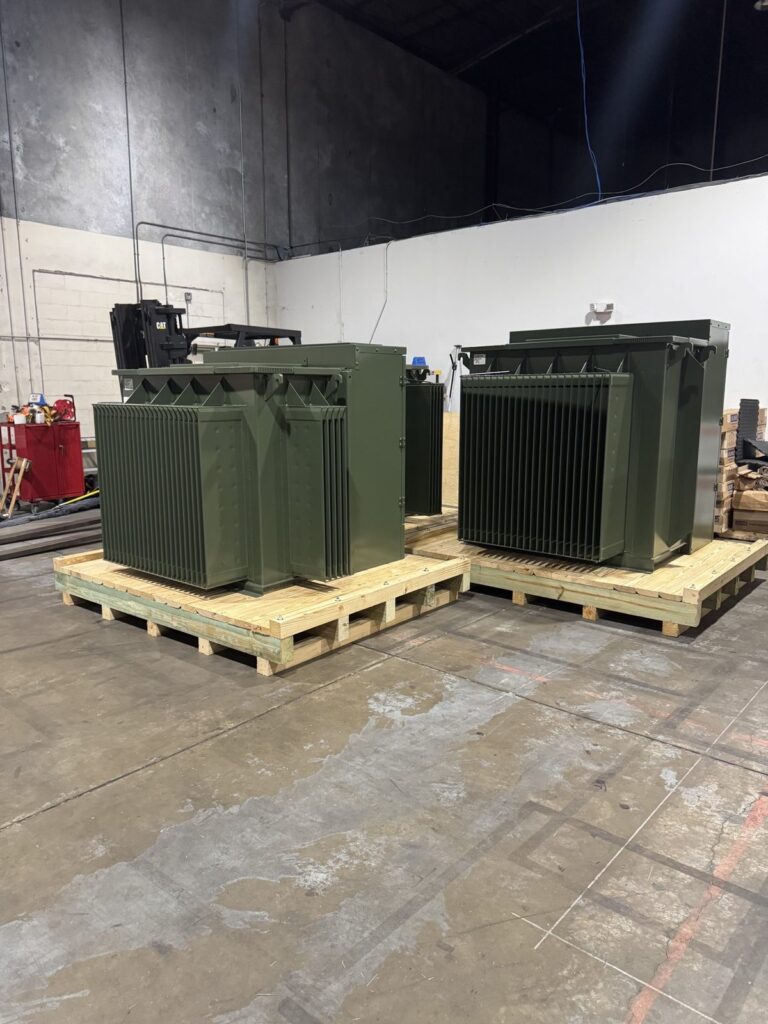
Finding a warehouse, and getting a yes on timing
Start with the Texas warehouse directory and map view. Line the listed warehouses up on location, on the services they offer, and on how soon they can take a load, then send a complete request to the ones that fit.
Space is not guaranteed just because a warehouse is listed, so check capacity with the warehouse itself before you commit the freight. A same-day door is sometimes open when space allows, and next-day is a common outcome, but neither is a promise. Do not roll a truck in without a confirmed slot. Get the intake window in writing before the truck rolls, and confirm the arrival date at the same time.
For port freight more broadly in Texas, see transloading in Texas.
What to send so the first reply is a usable quote
A thin request gets a question back, not a quote. Send this list with your first message:
- Arrival date, and whether you need a live unload or a drop trailer
- Pallet count, and whether the freight arrives floor-loaded or already palletized
- Weight and dimensions of the items, or an itemized pack list.
- Commodity, plus any hazmat, reefer, or food-grade requirements
- How long the freight will sit, and how often it moves in and out
- Outbound plan: every destination, pallets per destination, and who books the trucks
A fast quote is not a confirmed door time. Get the intake window in writing before you dispatch the truck.
Send your request straight to the warehouse itself. Expect an answer fast, usually inside a day.
Frequently asked questions
A same-day door is sometimes open when space allows, and next-day is a common outcome. Reach out in advance and never arrive without a confirmed slot. Get the intake window in writing before the truck rolls.
Holds commonly run days to weeks, and buffer stock held longer can run into months, charged per pallet for the time used. Free time and hold terms are set warehouse by warehouse, so confirm them before you commit the freight. Give the warehouse your planned hold length at the start, so extra time does not catch anyone by surprise.
Yes. Every warehouse listed here will split a load across several deliveries. Tell the warehouse the whole picture up front: every destination, and the pallet count headed to each one. The warehouse may book the outbound trucks for you, or you can book your own. Whether outbound is priced by the truck or by the pallet depends on the load itself and on that warehouse’s own rate sheet.
No single figure covers every short hold. Storage plus handling, like receiving, pallet moves in and out, and container unloading where needed, make up the invoice. Pallet count, hold length, and the unload and palletize work drive the total. Send those details with your request and the warehouse can give you a usable figure for your load.
Yes, warehouses book intake in advance, so do not send a container before the appointment is confirmed. Most warehouses ask for advance appointments, and booking rules and lead times are set house by house. Confirm the appointment window and the arrival date in writing before dispatch.
Send pallet count, arrival date, commodity, hold length, and move frequency, plus your outbound
plan. Weight and dimensions of the items, or an itemized pack list. Those details decide intake timing and onward movement, and a complete request gets an answer you can act on.